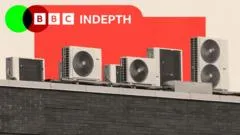
The air conditioning debate UK is intensifying as rising temperatures force a confrontation between climate mitigation and urgent adaptation. While traditional policy has prioritised cutting carbon emissions, recent heatwaves have exposed the lethal risks of homes designed to retain heat rather than dissipate it. Current data shows that only about 5% of English homes possess cooling units, despite the urban heat island effect potentially raising city temperatures by 7°C above rural areas. This article examines the tension between mechanical cooling and passive design, the funding gap between mitigation and adaptation, and the growing thermal inequality facing social housing tenants.
Why is the urban heat island effect making UK cities more dangerous?
The urban heat island effect causes city centres to remain significantly warmer than the surrounding countryside, particularly during the night. In many urban areas, temperatures can stay up to 7°C higher than rural counterparts because solid building materials like brick and concrete absorb solar radiation throughout the day and radiate it back into the environment at night. This prevents the necessary nocturnal cooling required for human health.
This phenomenon is not merely an inconvenience; it is a public health crisis. Research from the University of Birmingham regarding a previous West Midlands heatwave indicated that the heat island impact was responsible for approximately half of the 130 heat-related deaths recorded. When bodies cannot access cooler air during the early morning hours, the risk of mortality increases sharply, especially for vulnerable populations with pre-existing conditions.
The mechanics of heat retention
Traditional British architecture, often characterised by thick brick walls and heavy insulation, was designed to trap warmth to combat winter cold. However, in a warming climate, these same features act as thermal batteries. As Jo Shields of the Walsall Housing Group notes, the heat gain remains trapped within the masonry, making night-time cooling increasingly difficult for residents in densely built environments.
How does the tension between mitigation and adaptation affect climate funding?
A massive financial imbalance exists between climate change mitigation—reducing emissions—and adaptation—preparing for the impacts of a warming world. Historically, wealthy nations have focused on mitigation because it is seen as a moral imperative to stop the cause of warming. According to global data from 2023, $1.8 trillion was allocated to mitigation efforts, whereas adaptation received less than 5% of that amount, totaling roughly $65 billion.
This disparity is driven by both ideology and economics. Mitigation projects, such as electric vehicles and heat pumps, are highly 'investable' because they offer clear commercial returns. In contrast, adaptation measures like increasing urban shade, improving building ventilation, or retrofitting hospitals with cooling systems often lack direct bankable returns, making them harder to attract private capital. This has led to a policy environment where carbon reduction is legally mandated, but adaptation remains largely advisory.
The legislative gap in the UK
Baroness Brown, chair of the Climate Change Committee, highlights that this imbalance is codified in UK law. While the Climate Change Act requires ministers to meet legally binding carbon budgets (mitigation), adaptation strategies are essentially self-directed by the government through risk assessments and non-binding plans. This lack of 'teeth' in adaptation policy means that the infrastructure required to protect citizens from heat is often reactive rather than proactive.
What are the arguments for and against widespread air conditioning?
The debate over air conditioning (AC) has become a central flashpoint in UK climate policy, pitting immediate human comfort against long-term environmental stability. Proponents argue that as heatwaves become more frequent, mechanical cooling is a necessity for public health, particularly in critical infrastructure like hospitals and schools.
The Climate Change Committee has recommended that cooling units be installed in hospitals and care homes within the next decade, and in schools within 25 years. Supporters, such as David Lawrence of the Centre for British Progress, argue that it is illogical to insulate homes for winter but deny them cooling for summer, noting that AC is already standard in offices and retail sectors. They suggest that the current resistance to AC in public buildings is a form of 'miserabilism' that ignores the measurable impact of heat on concentration and health.
Conversely, experts like Professor Mat Santamouris warn that we cannot simply 'air-condition our way out of climate change.' Critics point to several significant drawbacks:
- Waste Heat: AC units do not destroy heat; they move it from inside a building to the street, warming the external environment for everyone else.
- Grid Strain: Cooling demand peaks on hot, still evenings when renewable energy like wind and solar is often at its lowest, forcing a reliance on gas.
- Feedback Loops: The increased electricity demand and the heat exhausted into streets can drive further warming, creating a cycle of rising temperatures and rising energy use.
The case for passive cooling
Many researchers advocate for a 'passive-first' approach. This involves using reflective roofing, natural ventilation, and strategic shading to lower indoor temperatures. Professor Santamouris notes that reflective roofing alone can reduce indoor temperatures from 43°C toward 30°C, providing significant relief at a fraction of the cost and environmental impact of mechanical AC.
Why is there a growing thermal divide in social housing?
A significant 'thermal divide' is emerging, where the ability to escape rising temperatures is increasingly determined by socio-economic status. While wealthy households can afford air conditioning and energy-efficient cooling, many social housing tenants are left in 'inhumane' conditions. In some parts of London, residents in top-floor flats have reported temperatures reaching 43°C, leading to legal battles against housing associations for providing unfit living conditions.
The financial barriers to cooling are exacerbated by current government subsidy structures. In England and Wales, the Boiler Upgrade Scheme offers £2,500 toward reversible air-to-air heat pumps, which can provide cooling. However, this is significantly less than the £7,500 offered for heating-only models. Furthermore, the scheme excludes social housing and new builds, effectively barring the very populations most at risk from heat-related illness.
The vulnerability of the most deprived
Research from the Climate Change Committee indicates that the most deprived neighbourhoods are over seven times more likely to be badly exposed to heat. As the ECO scheme for social housing upgrades closes and replacement schemes face delays, the gap between those who can afford to stay cool and those who cannot continues to widen. This inequality transforms a meteorological event into a structural social injustice.
FAQ: Air conditioning and climate adaptation
Is air conditioning bad for the environment?
Air conditioning has several environmental drawbacks. It consumes significant electricity, often during peak times when fossil fuels are needed, and it exhausts waste heat into the streets. This process can raise local temperatures, contributing to the urban heat island effect and driving further demand for cooling.
What is the difference between mitigation and adaptation?
Mitigation refers to actions taken to reduce or prevent the emission of greenhouse gases to slow climate change. Adaptation refers to adjustments in social, economic, or ecological systems in response to actual or expected climatic stimuli, such as installing cooling in hospitals to handle rising temperatures.
Can passive cooling actually replace air conditioning?
Passive cooling can significantly reduce indoor temperatures through methods like reflective roofing, shading, and improved ventilation. While it may not be sufficient in extreme heatwaves for all people, experts argue it should be the primary line of defence to minimize energy use and waste heat.
Why are social housing tenants excluded from some cooling grants?
Current UK subsidy schemes, such as parts of the Boiler Upgrade Scheme, often have eligibility criteria that exclude social housing and new builds. This creates a situation where the most vulnerable residents, who live in homes most prone to overheating, cannot access financial support for cooling technologies.
How does the urban heat island effect work?
The urban heat island effect occurs when cities replace natural land cover with dense concentrations of pavement, buildings, and other surfaces that absorb and retain heat. This causes urban areas to become much warmer than surrounding rural areas, especially at night when buildings radiate stored heat.
Key takeaways
- Urban heat islands can raise city temperatures by up to 7°C compared to rural areas.
- Only approximately 5% of English homes currently have air conditioning units installed.
- Global climate funding for adaptation is less than 5% of the amount spent on mitigation.
- The most deprived neighbourhoods are seven times more likely to be exposed to heat.
- Passive cooling methods, like reflective roofing, can significantly lower indoor temperatures.
The future of cooling policy
The transition from a focus on carbon mitigation to a balanced approach involving robust adaptation is no longer a theoretical debate but a matter of public safety. As heatwaves become a seasonal reality, the UK must navigate the complex intersection of energy grid stability, urban design, and social equity. Relying solely on mechanical cooling risks deepening the thermal divide and increasing emissions, yet ignoring the need for cooling in hospitals and homes leaves the most vulnerable at extreme risk. A successful strategy will likely require a hierarchy of solutions: prioritising passive design and urban greening, followed by targeted, efficient cooling for those in genuine need.