As veteran reporters push back against controversial statements, the tension between reporting news and amplifying polarizing ideologies reaches a boiling point. This conflict forces newsrooms to question whether covering high-profile figures provides necessary public information or simply grants a massive, unearned megaphone to radical rhetoric. Journalists are increasingly caught in a crossfire between their duty to inform the electorate and the risk of legitimizing dangerous misinformation. This struggle defines the modern era of political journalism, where the line between objective reporting and accidental amplification is becoming dangerously thin for every major outlet.
Why is the Marjorie Taylor Greene platform so controversial?
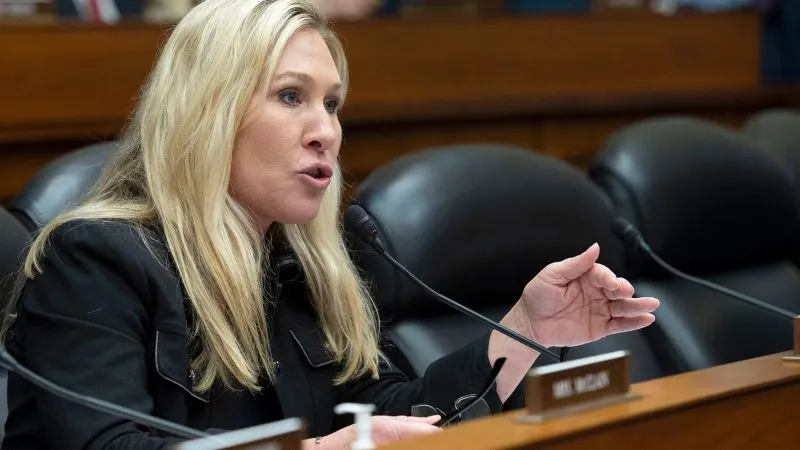
The controversy surrounding the Marjorie Taylor Greene platform stems from her history of making statements that many consider to be outside the bounds of mainstream political discourse. Critics argue that when major news outlets provide her with significant airtime, they are not merely reporting news but are actively participating in the amplification of polarizing ideologies.
The tension lies in the dual role of the press: to inform the public about all political actors and to avoid providing a megaphone for rhetoric that may undermine democratic institutions. For many observers, the visibility afforded by prestigious programs like 60 Minutes serves to validate fringe viewpoints, making them appear more mainstream than they truly are within the broader electorate. This creates a paradox where the very act of documenting a controversial figure can inadvertently bolster their influence.
The distinction between reporting and amplification
A key element of this debate is the distinction between reporting on a politician's actions and providing a platform for their rhetoric. Reporting involves factual accounts of what a representative says or does, whereas amplification occurs when the media provides a stage that allows the individual to speak directly to a mass audience without sufficient immediate pushback or context.
This distinction is crucial in an era where viral clips can spread misinformation faster than fact-checkers can respond. When a journalist acts as a neutral conduit for a statement, they may unintentionally facilitate the spread of ideas that lack evidentiary support. The challenge for newsrooms is to ensure that the 'stage' provided to a politician is accompanied by the necessary scaffolding of truth, preventing the interview from becoming a monologue of unvetted claims.
How does media coverage affect political polarization?
Media coverage of figures like Marjorie Taylor Greene can significantly influence the level of polarization within the United States. When news outlets focus heavily on the most divisive aspects of a politician's persona, it often triggers a cycle of reactionary politics that deepens the divide between different segments of the population.
This phenomenon is often driven by the attention economy, where sensationalism and conflict generate higher engagement and viewership. In a digital landscape where clicks and views are the primary metrics of success, the most extreme positions often receive the most visibility. However, the cost of this engagement is often a more fractured public square. By highlighting the most extreme positions, the media can inadvertently create a perception that the political center is disappearing, leaving only the fringes to engage in combat. This creates a feedback loop where politicians adopt more radical stances to maintain media relevance, and the media covers those stances to maintain viewership.
What are the ethical dilemmas for veteran journalists?
Veteran journalists face a profound ethical dilemma when deciding how to cover controversial figures like Marjorie Taylor Greene. On one hand, the journalistic duty to cover all significant political figures is paramount; on the other, there is a responsibility to minimize harm and avoid the spread of falsehoods.
During her 60 Minutes interview, the interaction between the reporter and the congresswoman highlighted this struggle. Journalists must balance the need to ask tough, probing questions with the risk of becoming part of the very spectacle they are attempting to analyze. The goal is to hold power to account without becoming a tool for the subject's political messaging. This requires a high degree of professional discipline to ensure that the pursuit of a 'good interview' does not result in the validation of harmful narratives.
The challenge of real-time fact-checking
One of the most difficult aspects of this ethical challenge is the necessity of real-time fact-checking. In a live or high-stakes interview setting, a journalist may not have the immediate resources to verify every claim made by a politician. If a controversial figure makes a false assertion, the delay between the statement and the correction can allow the misinformation to take root in the minds of the audience.
Even with the best intentions, the speed of modern political discourse often outpaces the ability of a single interviewer to provide exhaustive context. This leaves a gap that is frequently filled by social media users, who may use the original clip to spread the uncorrected falsehood rather than the subsequent correction. Consequently, the burden on the journalist is not just to ask the right questions, but to provide a level of immediate contextualization that can withstand the scrutiny of a viral clip.
What is the impact of mainstream visibility on political extremism?
Mainstream visibility can act as a catalyst for political extremism by providing a sense of legitimacy to radical ideas. When a figure who has been previously marginalised by the political establishment is suddenly granted access to the most prestigious news programs, it can signal to their supporters that their views are gaining traction in the halls of power.
This visibility can have several consequences:
- Validation of fringe views: Supporters of extremist ideologies may feel vindicated when they see their representatives interviewed on major networks, interpreting the airtime as an endorsement of their worldview.
- Recruitment and mobilisation: High-profile media appearances can serve as powerful tools for political mobilisation and the recruitment of new members into radical movements by presenting these figures as legitimate leaders.
- Shifting the Overton Window: Constant exposure to extreme rhetoric can gradually shift the boundaries of what is considered acceptable in public discourse, a process often referred to as shifting the Overton Window. As extreme views are normalized through repetition, they move from the 'unthinkable' to the 'radical' and eventually to the 'acceptable.'
Frequently asked questions
What is the main criticism of giving Marjorie Taylor Greene a platform?
The primary criticism is that providing a platform to controversial figures legitimises extremist rhetoric. Critics argue that instead of informing the public, major media outlets end up amplifying divisive statements that can undermine democratic norms and increase social polarization.
How do journalists attempt to mitigate the risks of such interviews?
Journalists attempt to mitigate risks through rigorous questioning, providing immediate context, and fact-checking claims as they are made. The goal is to maintain a critical distance and ensure that the interview serves as an interrogation of the subject rather than a promotional tool.
Does media coverage increase political division?
Yes, extensive coverage of highly divisive political figures can exacerbate polarization. By focusing on conflict and extreme positions to drive engagement, media outlets can contribute to a political environment where compromise becomes increasingly difficult and the electorate becomes more entrenched.
What is the 'Overton Window' in this context?
The Overton Window refers to the range of policies and ideas considered acceptable to the mainstream population. When controversial figures receive significant media attention, they can push the boundaries of this window, making previously extreme ideas seem more mainstream and acceptable.
Is it a journalist's duty to interview all elected officials?
While journalists have a duty to cover elected officials, this duty is balanced against the responsibility to avoid spreading misinformation. The challenge lies in determining how to cover all representatives while ensuring that the coverage does not inadvertently promote harmful or false narratives.
Key takeaways
- Media visibility for controversial figures can inadvertently legitimise extremist political rhetoric.
- Journalists face a constant tension between the duty to report and the risk of amplification.
- The attention economy often rewards sensationalism, which can deepen political polarization.
- Mainstream platforms can shift the Overton Window, making radical ideas appear more mainstream.
The evolving landscape of political media
The debate over the Marjorie Taylor Greene platform reflects a broader crisis in how political information is consumed and processed in the modern era. As the lines between news, opinion, and entertainment continue to blur, the responsibility of the media to act as a gatekeeper of truth becomes even more critical. The challenge for the future of journalism lies in finding a way to provide comprehensive coverage of the political spectrum without sacrificing the integrity and stability of the democratic discourse. The way media outlets handle controversial figures today will likely shape the political reality of tomorrow.