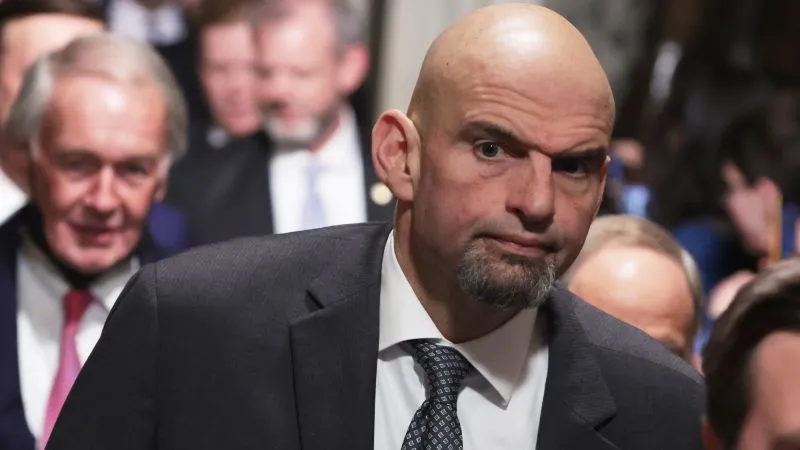
In a candid and deeply personal discussion with CBS, Senator John Fetterman (D-PA) detailed his ongoing struggle with depression and the heavy psychological toll of recent political battles. He spoke openly about the mental health challenges that have shaped his recent experiences in the public eye. By sharing these intimate details, the Senator aims to shed light on the invisible burdens carried by many leaders. This conversation provides a rare, unfiltered look at the human side of politics and the resilience required to navigate such intense scrutiny.
What did Senator John Fetterman reveal about his mental health?
Senator John Fetterman (D-PA) has publicly addressed his ongoing struggle with depression, describing the profound impact it has had on his life. In an interview with CBS, the lawmaker detailed the difficulty of managing a clinical condition while navigating the high-stakes environment of United States politics. He specifically pointed to the period following his recent election as a time of significant personal challenge.
Fetterman's disclosure is notable because it brings a level of vulnerability to the Senate that is rarely seen. By speaking openly about his diagnosis, he moves the conversation from abstract policy discussions to the lived reality of mental health disorders. His comments suggest that the pressures of campaigning and governing can exacerbate existing psychological vulnerabilities. The Senator's willingness to share these details provides a rare glimpse into the personal toll that high-level political service can take on an individual's well-being.
The specifics of his struggle highlight a disconnect between the public image of a political victor and the private reality of the individual. While the world saw a successful campaign conclusion, Fetterman was navigating a complex internal landscape. This distinction is vital for understanding the human cost of political life, as it emphasizes that professional success does not insulate an individual from mental health crises.
The timing of the disclosure
The Senator's decision to speak out comes at a time when the rigors of political life are under increased scrutiny. Fetterman noted that the period following his tight electoral victory was particularly taxing, suggesting that the transition from candidate to seated official provides a unique set of stressors that can trigger or deepen depressive episodes. This timing is critical, as it highlights how the conclusion of a political battle does not necessarily signal the end of stress, but can instead introduce new, different forms of pressure.
The transition from the intense, focused energy of a campaign to the day-to-day responsibilities of a United States Senator involves a shift in both pace and scrutiny. For Fetterman, this period of transition coincided with a heightened sense of personal struggle, making the timing of his comments particularly poignant for those observing the intersection of public service and private health. The immediate aftermath of an election, often characterized by a shift from high-adrenaline combat to the administrative and legislative grind, can create a psychological vacuum that is difficult to manage.
Furthermore, the timing suggests that the exhaustion of a tight race may not manifest fully until the immediate adrenaline of the campaign has subsided. By speaking out now, Fetterman addresses the reality that the 'victory' phase of a political cycle can be just as psychologically volatile as the campaign itself.
How did the election impact his condition?
The intensity of the recent election served as a major catalyst for Fetterman's mental health struggles. Following a closely contested race, the Senator described experiencing a downward spiral, a term used to characterize the deepening of his depressive symptoms. The exhaustion of the campaign trail, combined with the uncertainty of the results, created an environment where his mental health was severely tested.
Political analysts often note that the modern electoral process is increasingly characterized by high tension and constant scrutiny. For Fetterman, this was not merely a professional hurdle but a personal crisis. The transition from the adrenaline of a campaign to the responsibilities of office can often leave individuals feeling depleted, a state that can be particularly dangerous for those managing depression. The 'downward spiral' he described reflects the cumulative weight of the electoral process, where the finality of the vote does not immediately resolve the psychological exhaustion incurred during the fight for office.
The source indicates that the closeness of the election played a significant role in this experience. A tight race implies a prolonged period of high-stakes uncertainty, which can act as a sustained stressor on the nervous system. For a person already managing depression, this prolonged state of fight-or-flight can lead to the profound depletion Fetterman described, making the post-election period a period of vulnerability rather than relief.
Why is Fetterman's transparency significant for public discourse?
Fetterman's openness serves to de-stigmatize mental health issues within the halls of government. By identifying himself as someone battling depression, he challenges the traditional perception that political leaders must maintain an image of unbreakable strength. This transparency can encourage other public figures and constituents to seek help without fear of professional reprisal. When a sitting Senator speaks candidly about clinical depression, it validates the experiences of millions who face similar challenges in their private lives.
Furthermore, his story highlights the need for better support systems within political institutions. If a sitting Senator can experience such a significant mental health crisis, it raises questions about the adequacy of the resources available to all public servants. His experience provides a human face to a global health issue that affects millions of people regardless of their professional standing. By bringing these issues into the light, Fetterman shifts the narrative from one of perceived weakness to one of courageous honesty.
This transparency also forces a reconsideration of how 'fitness for office' is discussed. Traditionally, discussions around a candidate's health have focused on physical ailments or cognitive capacity, often ignoring the psychological dimension. Fetterman's approach suggests that mental health is not a separate, secondary issue, but a central component of a leader's ability to function and serve effectively.
What are the broader implications for mental health in leadership?
The intersection of mental health and leadership is a growing area of concern in both domestic and international politics. Fetterman's case illustrates that even individuals in positions of significant power are not immune to the debilitating effects of depression. This reality necessitates a shift in how we evaluate the fitness and resilience of political candidates and officeholders, acknowledging that mental health is a fundamental component of overall capacity.
As mental health awareness continues to grow globally, the expectation for leaders to be transparent about their well-being may increase. This shift could lead to more robust discussions regarding the psychological demands of high-pressure roles and the importance of integrating mental health care into the standard operations of government bodies. Fetterman's experience serves as a case study for how the pressures of modern governance can interact with personal health, potentially influencing future standards for leadership transparency and support.
The broader implications extend to the electorate as well. As voters become more aware of the psychological demands placed on representatives, there may be a shift in how they perceive the resilience and stability of their leaders. Fetterman's disclosure may set a precedent where mental health transparency becomes a standard part of a leader's public profile, rather than an exception handled behind closed doors.
FAQ: John Fetterman's mental health journey
Which news outlet first reported on Fetterman's comments?
CNN reported on Senator John Fetterman's comments regarding his struggle with depression, citing his interview with CBS. The report highlighted his willingness to discuss the personal toll that political life and recent elections have taken on his mental well-being.
How did Fetterman describe his experience after the election?
Senator Fetterman described his experience following a tight election as a period of significant difficulty. He indicated that the aftermath of the campaign contributed to a downward spiral in his mental health, making it a particularly challenging time for his personal stability.
Is depression a common issue for political figures?
While specific data on all political figures is limited, Fetterman's transparency suggests that mental health struggles are a reality in high-pressure political environments. His disclosure helps to break the silence surrounding these issues in the public and political spheres.
What was the context of his CBS interview?
The interview with CBS provided a platform for Fetterman to speak candidly about his battle with depression. He used the opportunity to explain the personal challenges he has faced, particularly in the context of his recent political victory and the stresses of office.
What is the significance of Fetterman's public statement?
The significance lies in the de-stigmatization of mental health. By sharing his personal struggle, Fetterman encourages a more open dialogue about depression and mental illness, potentially influencing how both the public and political institutions approach psychological health.
Key takeaways
- Senator John Fetterman has publicly shared his personal battle with depression.
- The Senator noted that his mental health was severely tested following a tight election.
- His comments were made during a candid interview with CBS.
- Fetterman's transparency aims to reduce the stigma surrounding mental health in politics.
The path forward for mental health awareness
The disclosure by Senator John Fetterman marks a significant moment in the intersection of politics and mental health. By choosing to be vulnerable about his struggle with depression, he has provided a powerful example of the importance of prioritizing psychological well-being. As the conversation evolves, it remains to be seen how much influence such personal testimonies will have on the institutional support and public perception of mental health in leadership roles. His journey serves as a reminder that even in the highest levels of government, the human element of mental health cannot be ignored.