Understanding the complex relationship between production decisions by OPEC+ and the costs felt at the pump is essential for navigating today's volatile energy market. When major oil-producing nations decide to restrict supply, the immediate ripple effect is often seen in rising fuel costs for consumers worldwide. This article explores how these strategic shifts influence global crude oil availability and, consequently, drive inflation and economic shifts. By analyzing the mechanics of supply and demand, we provide a clear picture of why your local gas station prices fluctuate in response to international policy changes.
How does an OPEC oil cut influence gas prices?
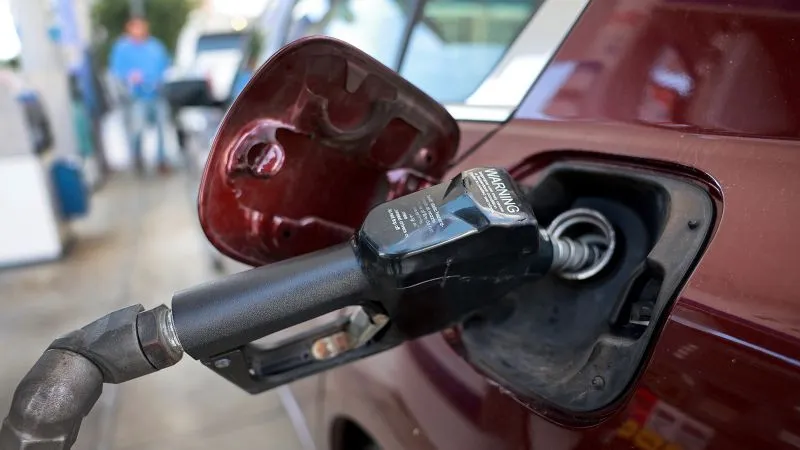
An OPEC oil cut directly impacts gas prices by reducing the global supply of crude oil, which serves as the primary feedstock for gasoline production. When the Organization of the Petroleum Exporting Countries (OPEC) or its allies (OPEC+) decide to limit production, the immediate market reaction is often an increase in the price of crude oil benchmarks. Because refineries must purchase this crude to produce petrol, the rising cost of raw materials is passed down the supply chain to the pump.
The relationship between crude oil and gasoline is highly sensitive to supply-side shocks. A reduction in output creates a tighter market where demand may outstrip available supply, driving up the equilibrium price. For consumers, this manifests as higher costs at filling stations, which can have cascading effects on transportation costs and general inflation. The speed at which these costs reach the consumer depends on refinery margins and existing inventory levels, but the fundamental link remains the cost of the raw feedstock.
What are the primary drivers behind these production decisions?
The primary drivers behind an OPEC oil cut are typically market stabilization and revenue optimization. Member nations often seek to prevent a surplus of oil that could lead to a collapse in prices, which would negatively impact their national budgets and ability to fund public services. For many oil-dependent economies, maintaining a certain price floor is a matter of national fiscal security.
Beyond mere revenue, these decisions are often a calculated response to the perceived balance of the global market. If the group senses that global stockpiles are growing too large, they may preemptively cut production to avoid a downward spiral in valuation. This strategy is not just about immediate profit, but about long-term market management and ensuring that the group maintains its influence over global energy pricing structures.
Balancing Supply and Demand
OPEC members constantly monitor global economic indicators to determine the optimal level of production. If global economic growth slows, demand for energy may drop; in such scenarios, an oil cut is used as a tool to prevent prices from falling too low. For example, during periods of recession or industrial slowdown, the risk of a supply glut is high, making production cuts a necessary defensive measure to protect the value of the commodity.
Conversely, if demand is surging due to industrial expansion or seasonal travel, the group may maintain or slightly increase production to avoid extreme price spikes that could stifle economic activity. The challenge lies in the timing; if the group reacts too slowly to rising demand, prices may skyrocket due to scarcity, whereas reacting too slowly to falling demand can lead to a market crash. This delicate balancing act requires constant coordination among member states to ensure that the group's collective actions achieve the desired market equilibrium without causing excessive volatility.
What is the impact of OPEC decisions on the global economy?
The impact of OPEC decisions on the global economy is profound, as energy is a fundamental input for almost every sector. High oil prices resulting from supply cuts can act as a tax on consumers, reducing discretionary spending and potentially slowing economic growth in energy-importing nations. When the cost of fuel rises, it increases the cost of transporting goods, which in turn raises the price of almost all consumer products, contributing to broader inflationary pressures.
For energy-exporting nations, these cuts can be a lifeline, ensuring that the high prices necessary to maintain their economies are sustained. However, this creates a tension in the global market between the fiscal needs of producers and the inflationary pressures faced by consumers and manufacturers in importing countries. This tension can lead to geopolitical friction, as importing nations may attempt to find alternative energy sources or encourage non-OPEC production to mitigate the impact of the cuts. Furthermore, the volatility introduced by these decisions can complicate the monetary policies of central banks, which must balance inflation control with economic stability in an environment where energy costs are a primary driver of price indices.
How do geopolitical factors complicate the oil market?
Geopolitical factors act as a massive variable that can either amplify or negate the effects of an OPEC oil cut. Conflicts in key oil-producing regions, changes in international sanctions, or shifts in trade alliances can create sudden supply disruptions that are independent of OPEC's planned production levels. For instance, a sudden political conflict in the Middle East or Eastern Europe can trigger a supply shock that dwarfs the impact of a coordinated OPEC production cut.
When geopolitical tension rises, the market often prices in a 'risk premium,' meaning oil prices may rise even before a physical shortage occurs. This makes the job of OPEC more complex, as they must navigate a landscape where political instability can cause price swings that defy their coordinated production strategies. If a geopolitical event causes prices to rise sharply, OPEC may find itself in a position where it must decide whether to cut production further to support prices or increase production to help stabilize the market and ease global tensions. Consequently, the oil market remains a central arena where energy security and international diplomacy intersect, with every production decision being weighed against a backdrop of global political volatility.
Frequently asked questions
How quickly do OPEC decisions affect gas prices?
The impact on gas prices can be felt relatively quickly, often within days or weeks of a major announcement. While refinery processes and supply chain logistics take time, the global commodities market reacts almost instantly to news of supply cuts, driving up crude prices which then influence retail fuel costs.
Does every OPEC cut lead to higher gas prices?
Not necessarily. The effect depends on the prevailing market conditions, such as current global demand and existing inventory levels. If the market is already oversupplied, a small cut might not be enough to move prices upward, whereas a cut during a period of high demand will likely trigger a price spike.
What is the difference between OPEC and OPEC+?
OPEC is the core group of petroleum-exporting nations, while OPEC+ refers to the original OPEC members plus several non-OPEC oil-producing countries, most notably Russia. The inclusion of these additional nations significantly increases the group's total control over global oil supply and market influence.
Can non-OPEC production offset an OPEC oil cut?
Yes, production from non-OPEC countries, such as the United States, Brazil, or Canada, can act as a counterbalance. If non-OPEC production increases significantly during a period of OPEC cuts, the total global supply may remain stable, thereby mitigating the upward pressure on oil and gas prices.
Why is oil production so closely watched by economists?
Economists watch oil production because energy prices are a key driver of inflation and a major component of global trade. Fluctuations in oil prices affect everything from the cost of manufacturing goods to the cost of transporting them, making energy a central pillar of macroeconomic stability.
Key takeaways
- OPEC oil cuts aim to reduce global supply to stabilize or increase crude oil prices.
- Higher crude oil costs typically lead to increased prices for consumers at the gas pump.
- Production decisions are often driven by the need to balance national revenues with global demand.
- Geopolitical instability can create price volatility that exists independently of OPEC decisions.
- Non-OPEC production levels can mitigate the market impact of supply cuts by OPEC+.
Conclusion
The decision to implement an OPEC oil cut is a powerful lever in the global energy market, designed to manage supply and influence the valuation of crude oil. While these moves can provide much-needed fiscal stability for producing nations, they also introduce complexities for the global economy, often resulting in higher energy costs for consumers and businesses. As geopolitical tensions and shifting demand patterns continue to evolve, the interplay between OPEC's production strategies and the broader energy landscape will remain a critical factor in determining global economic stability and the cost of living worldwide.