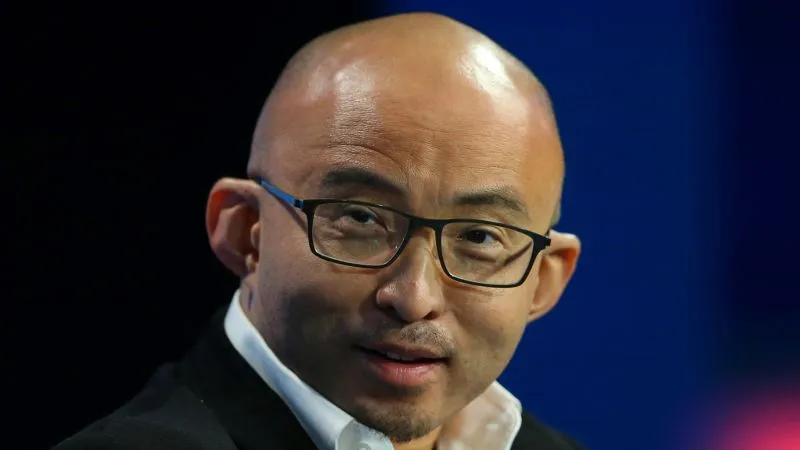
The boutique investment bank China Renaissance has officially suspended its share trading and delayed the release of its annual results. This sudden development follows the firm's inability to establish contact with its founder, Bao Fan, a veteran dealmaker who has long been considered a central figure in China's rapidly evolving technology industry. The uncertainty surrounding his whereabouts has sent ripples through the financial markets, leaving investors questioning the future leadership and stability of the firm during this critical period of investigation and silence.
Why has China Renaissance suspended trading and delayed its financial results?
China Renaissance has officially suspended trading of its shares because the company has been unable to establish contact with its founder and CEO, Bao Fan. This absence has created a critical bottleneck in the firm's regulatory compliance and auditing processes, effectively paralyzing the company's ability to function as a public entity on the Hong Kong market.
According to a filing by China Renaissance, the company's auditors are currently unable to complete their mandatory work or sign off on the required reports due to Bao's absence. This lack of leadership and oversight has prevented the board from providing a reliable estimate for the approval of the 2022 audited results. Consequently, the firm faces a significant risk of missing the April 30 deadline for dispatching its annual report, a requirement mandated by Hong Kong’s listing rules.
The company previously clarified in late February that Bao Fan was "cooperating in an investigation" conducted by certain authorities within China. However, the specific nature of this investigation remains undisclosed by the firm. While the company has provided no further details, Chinese media reports suggest that Bao may be assisting with an inquiry involving a former executive of China Renaissance. The company has not provided any timeline for when Bao might be available to resume his duties or when the auditing process might conclude.
What is the impact of Bao Fan's disappearance on China Renaissance shares?
The disappearance of Bao Fan triggered extreme volatility and a massive sell-off in China Renaissance stock. Investors reacted sharply to the uncertainty surrounding the leadership of one of the country's most influential tech dealmakers, leading to a period of intense market instability.
At the height of the uncertainty, shares in China Renaissance plunged by as much as 50%. The suspension of trading on Monday was a direct consequence of this instability and the inability to provide transparent financial updates to the market. For investors, the combination of a missing key executive and the inability to verify financial statements creates a high-risk environment that often leads to prolonged periods of market paralysis.
Market reaction and investor uncertainty
The suddenness of the disappearance, coupled with the lack of clarity regarding the investigation, has left the market in a state of flux. In the financial services sector, the reputation and presence of a founder are often inextricably linked to the company's valuation. When a figurehead like Bao Fan becomes unavailable, the perceived risk of regulatory intervention or internal mismanagement rises sharply, driving down share prices before trading is officially halted.
The market is currently left with several unanswered questions: how long the suspension will last, whether the investigation will impact the firm's long-term operations, and what the ultimate fate of its founder will be. Without direct communication from the company or the authorities, the vacuum of information continues to fuel investor anxiety and downward pressure on the firm's perceived value.
How significant is Bao Fan's role in the Chinese technology sector?
Bao Fan is considered a veteran dealmaker whose influence has shaped the landscape of China's modern technology industry. His expertise has been central to some of the most significant mergers and platform expansions in the region, making his absence a notable event for the broader ecosystem.
Bao Fan's track record includes several landmark transactions that have defined the current Chinese digital economy:
- Meituan and Dianping Merger: He played a pivotal role in brokering the 2015 merger between these two leading food delivery services, which resulted in the creation of a dominant "super app" platform ubiquitous across China.
- Electric Vehicle Sector: His team has been instrumental in investing in US-listed Chinese electric vehicle manufacturers, specifically Nio and Li Auto.
- Internet Giants: He helped major internet corporations, including Baidu and JD.com, successfully complete their secondary listings on the Hong Kong Stock Exchange.
Because of these deep-seated connections, the disappearance of Bao Fan is not merely a corporate crisis for China Renaissance but a significant event for the broader tech ecosystem in China. His ability to facilitate large-scale capital movements and strategic mergers has been a key component of the sector's growth, and his absence leaves a void in the high-level dealmaking that drives industry consolidation.
Is the disappearance part of a wider crackdown on Chinese finance?
The situation surrounding Bao Fan appears to align with a broader, systemic investigation into the Chinese financial sector led by national authorities. This crackdown has targeted several high-ranking executives across various financial institutions, suggesting a period of intense regulatory scrutiny.
Recent enforcement actions by Chinese regulators include:
- Bank of China: The Central Commission for Discipline Inspection and the State Supervision Commission recently launched an investigation into Liu Liange, the former party secretary and chairman of the state-owned Bank of China. Liu is suspected of "serious violations of discipline and law."
- China Life Insurance: In January, Wang Bin, the former party chief and chairman of China Life Insurance, was charged by national prosecutors for allegedly taking bribes and concealing overseas savings.
These actions are part of a wider initiative led by President Xi Jinping to tighten control over the financial industry and address potential systemic risks. The targeting of senior officials in major state-owned and private institutions suggests that the scrutiny on the financial sector is intensifying. In this context, the disappearance of high-profile executives like Bao Fan is viewed by many as a symptom of a much larger regulatory trend aimed at ensuring discipline and law within the nation's financial pillars.
Frequently asked questions
Why can't China Renaissance release its 2022 results?
The company cannot release its audited results because its auditors are unable to complete their work without the presence of founder Bao Fan. His absence has prevented the board from approving the necessary financial statements required by Hong Kong listing rules.
What happened to China Renaissance stock prices?
Shares in China Renaissance experienced a massive decline, dropping by as much as 50% following news of Bao Fan's disappearance. This volatility eventually led to the official suspension of trading for the company's shares.
Is Bao Fan being detained by authorities?
While the company has not explicitly used the term "detained," it stated that Bao Fan is "cooperating in an investigation" being carried out by Chinese authorities. Media reports suggest the investigation may involve a former executive of the firm.
Who is Bao Fan and why is he important?
Bao Fan is the 52-year-old founder of China Renaissance and a prominent investment banker. He is vital to the tech sector due to his role in brokering major deals for companies like Meituan, Baidu, and Nio.
What is the context of the investigations in China?
The investigations are part of a broader financial crackdown by the Chinese government. This includes scrutiny of senior executives at major institutions like the Bank of China and China Life Insurance to address discipline and law violations.
Key takeaways
- China Renaissance suspended trading following the disappearance of founder Bao Fan.
- The firm cannot meet the April 30 deadline for its 2022 audited annual report.
- Bao Fan's disappearance caused China Renaissance shares to drop by up to 50%.
- The event occurs during a wider Chinese crackdown on financial sector executives.
Conclusion
The disappearance of Bao Fan and the subsequent suspension of China Renaissance trading highlight the profound risks inherent in the intersection of high-stakes tech investment and intensive regulatory scrutiny in China. As a central figure in the consolidation of China's digital economy, Bao's absence leaves a significant void in the firm's leadership and its ability to satisfy international listing requirements. Furthermore, the timing of this crisis, set against a backdrop of investigations into major financial institutions like the Bank of China, underscores a period of heightened volatility and structural realignment within the Chinese financial landscape.