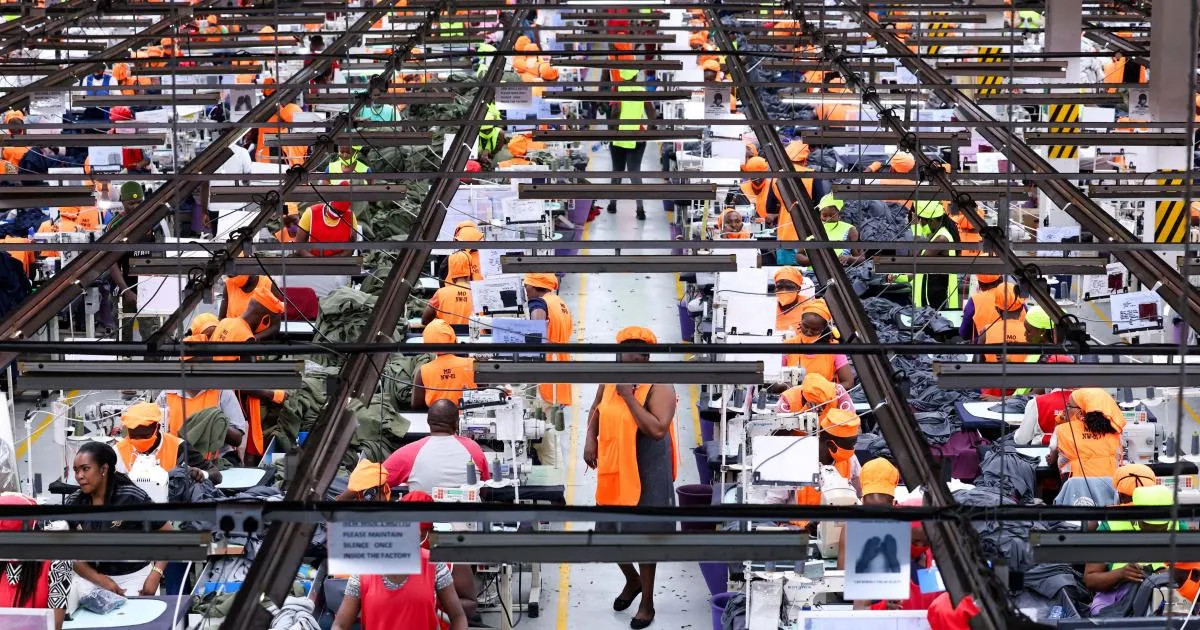
The Africa investment boom is currently transitioning from a model of humanitarian aid to one of strategic trade and industrial competition. While the continent accounts for only 3% of global GDP and 3% of global trade, it holds 30% of the world's known critical mineral reserves. As global powers like China, the US, and Gulf states compete for access to resources and markets, a widening gap is forming between prosperous, reforming nations and those trapped in instability. This article examines the drivers of this investment surge, the geopolitical race for African resources, and the structural factors that will determine which nations achieve long-term growth.
Why is the global interest in Africa shifting from aid to trade?
The global approach to the continent is moving away from traditional development assistance toward high-stakes commercial engagement. This shift is exemplified by recent policy changes in Washington, where the U.S. has begun closing USAID and emphasizing trade-based relationships with African leaders. While humanitarian funding may face cuts, international business interest is reaching new heights due to the continent's unique strategic advantages.
Investors are increasingly focused on three primary pillars: the abundance of critical minerals necessary for the global energy transition, a rapidly expanding consumer base, and a young workforce. Furthermore, Africa's geographic positioning along vital maritime routes—including the Suez Canal and the Bab el Mandeb Strait—makes its ports essential to global logistics. As competition intensifies among China, the United States, Europe, India, and the Gulf states, the continent is seeing a more diverse array of capital inflows than ever before.
The demographic and urban advantage
The potential for an economic takeoff is underpinned by significant demographic shifts. Unlike advanced economies that are facing aging populations, sub-Saharan Africa is expected to see its working-age population grow while other regions decline. According to demographer Nicholas Eberstadt, by 2040, national cohorts of people aged 15 to 49 will decrease almost everywhere outside sub-Saharan Africa. This 'youth bulge' provides a massive labor pool that, if properly managed, could drive industrialization. Additionally, the OECD predicts that nearly two-thirds of Africans will live in urban centers by 2050. This urbanization, coupled with advancements in financial technology, offers a pathway to move beyond extractive industries into more diverse, service-oriented economies.
How are different global powers competing for African influence?
Geopolitical competition for African resources and infrastructure is creating a complex landscape of competing interests. China has historically dominated this space, investing over $350 billion in the continent over the last two decades, largely through the Belt and Road Initiative. Beijing’s influence is visible in major projects like the Addis Ababa–Djibouti and Mombasa–Nairobi railways. However, China's role is evolving from a primary lender to a significant debt collector, creating new tensions for borrowing nations.
In response, Western powers and Gulf states are aggressively expanding their footprints. The United States and G-7 partners are investing in corridors like the Lobito rail line, which connects the mineral-rich Democratic Republic of the Congo and Zambia to Angola's Atlantic coast. This project is specifically designed to secure the supply of copper for electric vehicles and renewable energy technologies. Meanwhile, the Gulf states are emerging as a formidable third force. The United Arab Emirates has become a leading source of new foreign direct investment, committing nearly $110 billion between 2019 and 2023. Unlike the debt-heavy Chinese model, Gulf sovereign wealth funds often prefer equity-based investments, which can be more attractive to African governments seeking to avoid debt distress.
Which regions are currently leading the investment surge?
Economic gains are not being distributed uniformly, with specific regions demonstrating much higher levels of integration and stability. Southern Africa stands out due to its advanced interstate infrastructure and regional cooperation. The existence of a power pool connecting twelve countries' electricity grids enhances reliability, while the customs union involving Botswana, Eswatini, Lesotho, Namibia, and South Africa allows for coordinated trade policy. These institutions enable investors to view the region as a unified market rather than a collection of small, isolated states.
In West Africa, Nigeria serves as a massive market scale due to its entrepreneurial ecosystem. In East Africa, a commercial core is forming through the close ties between Kenya, Tanzania, and Uganda. Smaller nations are also finding success through niche specializations; for instance, Mauritius has established itself as an international financial hub, while Rwanda and Botswana have attracted capital by offering highly stable and predictable policy environments. These 'bright spots' prove that even smaller economies can thrive if they prioritize institutional quality.
What determines whether a country succeeds or stagnates?
The divergence between the 'two Africas' is primarily driven by governance, stability, and the ability to implement structural reforms. According to the United Nations, over 80 percent of foreign direct investment on the continent is concentrated in just 15 countries. This concentration highlights a harsh reality: investors are willing to navigate many challenges, but they have almost zero tolerance for political uncertainty or the risk of contract instability.
Countries that suffer from frequent coups, such as Burkina Faso, Mali, and Niger, or those facing severe sovereign debt distress like Egypt and Mozambique, find it nearly impossible to attract the sustained capital required for long-term industrialization. Success depends on whether a government can move beyond the 'resource curse'—where mineral wealth leads to corruption rather than development—and instead invest in human capital.
The human capital requirement
The demographic dividend is not guaranteed. For the youth population to become an economic asset rather than a source of instability, governments must bridge the gap in education and employment. Currently, literacy rates among those aged 15 to 24 in sub-Saharan Africa stand at approximately 75 percent. Without massive improvements in education and the creation of formal jobs, the rapid urbanization and population growth could lead to social unrest rather than prosperity. The ability to match a young, urbanizing workforce with productive, high-value industries is the ultimate divider between the continent's winners and losers.
FAQ: Africa investment boom
What are the main drivers of investment in Africa?
The primary drivers include the continent's vast reserves of critical minerals, a rapidly growing and youthful workforce, and its strategic location along global maritime trade routes. Additionally, increasing urbanization and a growing middle-class consumer base are attracting diverse capital from China, the West, and the Gulf states.
How is the role of China changing in Africa?
China is transitioning from being the continent's primary infrastructure lender to a major debt collector. While it remains a massive investor through the Belt and Road Initiative, the shift in its financial approach is creating new economic pressures for many African nations that have accumulated significant debt.
Why are Gulf states becoming important investors?
Gulf states, particularly the UAE, are providing a different model of investment that often focuses on equity rather than debt. This 'patient capital' is highly attractive to African governments looking to develop infrastructure, digital services, and mining without increasing their sovereign debt burdens.
Will all African countries benefit from the current boom?
No, the benefits are highly concentrated. Most investment is focused on a small number of stable, reforming countries. Nations facing political instability, frequent coups, or extreme debt distress are likely to remain excluded from the current surge in foreign capital.
What is the significance of the Lobito Corridor?
The Lobito Corridor is a strategic rail project supported by the U.S. and G-7 partners. It aims to link the mineral-rich regions of the Democratic Republic of the Congo and Zambia to the Atlantic coast in Angola, facilitating the export of copper essential for the global green energy transition.
Key takeaways
- Critical minerals in sub-Saharan Africa represent 30% of the world's known reserves.
- Over 80% of Africa's foreign direct investment is concentrated in just 15 countries.
- The UAE has emerged as a top investor, committing $110 billion between 2019 and 2023.
- By 2050, nearly two-thirds of the African population is expected to live in cities.
- Success depends on transitioning from extractive industries to human capital development.
The path to long-term prosperity
The current era of intense global competition offers Africa a historic opportunity to move from a periphery player to a central pillar of the global economy. However, this potential remains contingent on domestic agency. The divide between the continent's prosperous and stagnant nations will be defined by the quality of their institutions and their ability to transform raw resources and demographic growth into stable, productive industries. For the many nations that can successfully implement reforms, the transition from aid-dependency to trade-driven growth could mirror the industrial successes of East Asia in the previous century.
| Investor Group | Primary Focus | Key Strategy/Project |
|---|---|---|
| China | Infrastructure & Minerals | Belt and Road Initiative; railway corridors |
| United States/G-7 | Critical Minerals & Security | Lobito Corridor; AGOA trade access |
| Gulf States (UAE/Saudi) | Equity, Real Estate & Digital | Direct equity in projects; infrastructure |
| Turkey/Emirates | Maritime & Logistics | Port operations and management |