A diverse team of four astronauts is set to lead NASA's Artemis II mission, a critical crewed flyby designed to test the safety of the Orion spacecraft before humans land on the Moon. This historic voyage marks a pivotal step in the Artemis program, aiming to validate life-support systems and communication protocols in deep space. By sending these highly trained professionals around the Moon, NASA ensures that all technical components are flight-ready for future lunar landings. This mission serves as the ultimate proving ground for the next generation of deep-space exploration technology.
Who are the members of the Artemis II astronaut crew?
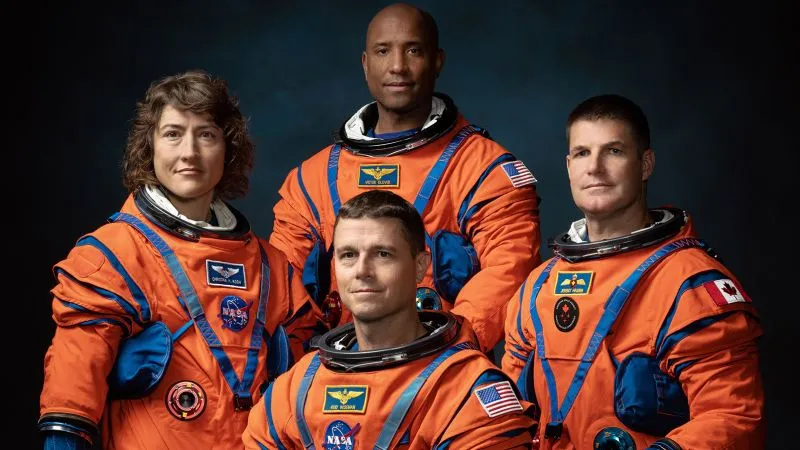
The Artemis II astronaut crew is composed of four individuals: Reid Wiseman, Victor Glover, Christina Koch, and Jeremy Hansen. Each member brings a unique set of skills and backgrounds essential for the success of a deep-space mission. NASA has carefully selected this team to ensure a balance of command experience, technical expertise, and international cooperation. This crew represents the vanguard of a new era of lunar exploration, moving beyond the uncrewed tests of the past to put human lives back into the lunar environment.
The Crew Composition
Reid Wiseman will serve as the mission commander, providing the leadership necessary for navigating the complexities of lunar orbit. Victor Glover, acting as the pilot, brings extensive experience in flight operations and mission management. Christina Koch, a veteran of long-duration spaceflight, will serve as a mission specialist, contributing her deep understanding of life support and orbital operations. Jeremy Hansen, representing the Canadian Space Agency, joins the crew as a mission specialist, highlighting the collaborative nature of modern space exploration.
The selection process for these individuals focused on their ability to handle the extreme rigors of deep-space transit. While Wiseman and Glover provide the foundational command and piloting expertise, Koch's experience with long-term habitation is vital for testing how the human body and spacecraft systems interact over extended periods. Hansen's inclusion ensures that the mission is not just a national endeavor, but a demonstration of the growing international infrastructure supporting lunar science.
What is the primary objective of the Artemis II mission?
The primary objective of the Artemis II mission is to perform a crewed lunar flyby to test the safety and functionality of the Orion spacecraft. Unlike previous uncrewed tests, this mission places human lives in the lunar environment to validate critical systems before any planned landings occur. The crew will travel around the Moon and return to Earth, providing invaluable data on how humans interact with deep-space hardware.
The mission is designed to verify several key components, including:
- Life support systems in a deep-space environment.
- Communication links between the spacecraft and Earth during lunar transit.
- The ability of the Orion capsule to withstand the thermal and radiation challenges of the Moon's vicinity.
- Crew performance during high-stress orbital maneuvers.
By conducting a flyby rather than a landing, NASA can focus specifically on the transit and orbital phases of the journey. This allows the agency to gather high-fidelity data on life support stability and radiation shielding without the added complexity of lunar descent and ascent maneuvers. The success of these tests is a prerequisite for the more ambitious landing missions that follow.
How does Artemis II fit into the broader NASA Artemis program?
Artemis II serves as the critical bridge between initial uncrewed testing and the eventual Artemis III landing mission. While the Artemis I mission successfully tested the Space Launch System (SLS) rocket and the Orion capsule without a crew, Artemis II introduces the human element. This progression is necessary to ensure that all safety protocols and hardware iterations are robust enough to support long-term lunar habitation and eventual Mars exploration.
The program follows a tiered approach to deep-space exploration:
- Artemis I: Uncrewed testing of the SLS and Orion.
- Artemis II: Crewed flyby to validate human-rated systems.
- Artemis III: The first crewed lunar landing of the modern era.
By successfully executing the flyby, NASA builds the confidence required to send astronauts to the lunar south pole, a region of intense scientific interest due to the potential presence of water ice. Each step in the Artemis program is designed to build upon the technical successes of the previous one, creating a ladder of capability that leads from Earth orbit to the Moon, and eventually, to Mars.
Why is the inclusion of international partners significant?
The inclusion of Jeremy Hansen from the Canadian Space Agency signifies the shift from national space programs to a global cooperative model. Space exploration is no longer the sole domain of a single nation; instead, it relies on a network of international partners to share costs, expertise, and scientific goals. This cooperation is codified through various international agreements that govern how space is explored and utilized.
International participation provides several advantages:
- Resource Sharing: Distributing the immense financial and technical burden of deep-space missions.
- Diverse Expertise: Accessing specialized technologies and scientific perspectives from different nations.
- Geopolitical Stability: Fostering peaceful cooperation through shared scientific objectives in orbit and beyond.
The presence of the Canadian Space Agency on the Artemis II crew is a tangible manifestation of these partnerships. It demonstrates that the path to the Moon is a shared human endeavor, leveraging the specialized contributions of various space agencies to achieve goals that would be difficult for any single nation to reach alone.
What are the technical challenges facing the crew?
The technical challenges facing the Artemis II astronaut crew involve managing the physiological and psychological impacts of deep-space travel. Beyond the mechanical reliability of the spacecraft, the human body must endure prolonged exposure to microgravity and increased radiation levels outside the Earth's protective magnetic field. The mission will serve as a live laboratory for studying these effects in real-time.
Key technical hurdles include:
- Radiation Shielding: Ensuring the Orion capsule provides adequate protection against solar flares and cosmic rays.
- Autonomous Systems: Testing the spacecraft's ability to manage critical functions with minimal real-time intervention from ground control.
- Re-entry Dynamics: Managing the high-velocity return to Earth's atmosphere, which requires precise heat shield performance.
The crew will be monitoring these systems constantly, providing feedback that will be used to refine the hardware for Artemis III. This includes studying how the psychological stresses of isolation and the physical stresses of high-G maneuvers impact decision-making and mission performance.
Frequently asked questions
Who is the commander of the Artemis II mission?
Reid Wiseman is the commander of the Artemis II mission. As the mission commander, he is responsible for the overall success of the flight and the safety of the crew during their journey around the Moon and their subsequent return to Earth.
Will the Artemis II crew land on the Moon?
No, the Artemis II crew will not land on the lunar surface. The mission is designed as a lunar flyby, meaning the crew will travel around the Moon and then return to Earth, testing the spacecraft's systems with humans on board.
Which agency is providing the Canadian astronaut?
The Canadian Space Agency (CSA) is providing Jeremy Hansen for the mission. His participation as a mission specialist underscores the international partnership between NASA and the CSA in the Artemis program's pursuit of lunar exploration.
What is the difference between Artemis I and Artemis II?
Artemis I was an uncrewed mission intended to test the Space Launch System and the Orion capsule's flight capabilities. Artemis II is the first crewed mission in the program, designed to validate these systems while carrying four astronauts around the Moon.
How long has it been since humans went to the Moon?
It has been approximately 50 years since the last crewed lunar missions during the Apollo era. Artemis II represents NASA's first major step toward returning humans to the lunar surface in over half a century.
Key takeaways
- The Artemis II crew includes Reid Wiseman, Victor Glover, Christina Koch, and Jeremy Hansen.
- The mission is a crewed lunar flyby designed to test the Orion spacecraft's safety.
- Jeremy Hansen's participation marks the first time a Canadian will travel to the Moon.
- Artemis II is a prerequisite for the planned Artemis III crewed lunar landing.
Conclusion
The selection of the Artemis II astronaut crew marks a definitive turning point in modern space exploration. By transitioning from uncrewed testing to human-rated lunar flybys, NASA is systematically de-risking the path to the lunar surface. The diverse expertise of Wiseman, Glover, Koch, and Hansen, combined with international cooperation through the Canadian Space Agency, sets a new standard for deep-space missions. As the world watches this historic journey, the success of Artemis II will lay the foundation for sustained human presence on the Moon and the eventual leap toward Mars.