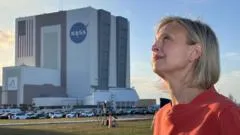
The Artemis II mission has concluded its historic voyage, marking the first time humans have traveled this far into space in decades. The four-person crew, consisting of Reid Wiseman, Victor Glover, Christina Koch, and Jeremy Hansen, successfully completed a 252,756-mile journey around the Moon. This mission served as a critical test flight for NASA's new rocket and spacecraft systems. This article examines the technical challenges, the human experiences of the astronauts, and the long-term goals of NASA's lunar exploration program.
What were the technical challenges during the Artemis II mission?
The Artemis II mission faced significant technical hurdles, ranging from spacecraft living conditions to critical hardware malfunctions. Because this was a test flight for both the rocket and the spacecraft, every system was under intense scrutiny by mission control at the Johnson Space Center in Houston.
One of the most prominent issues involved the Universal Waste Management System. Despite a design cost of $23 million, the toilet experienced plumbing difficulties. During media briefings, the crew revealed that while solid waste management was functional, they had to rely on collapsible contingency urine devices—essentially bags with funnels—for liquid waste.
Furthermore, the physical constraints of the mission were evident through live video streams. The four astronauts lived, worked, and slept in a capsule roughly the size of a minibus, leaving no room for privacy. This cramped environment tested the crew's ability to maintain functionality while being monitored by millions of people worldwide.
The importance of mission control monitoring
At the Johnson Space Center, the mission control team acted as the vital nerve centre for the entire operation. Controllers monitored a constant stream of data regarding navigation, life support, and spacecraft integrity. This level of oversight was essential because the mission was a maiden flight for the hardware, meaning any unforeseen technical glitch could have had catastrophic consequences for the crew.
How did the crew experience the lunar environment?
As the spacecraft approached its lunar destination, the crew observed the Moon's surface in unprecedented detail, documenting the landscape through thousands of images and audio descriptions. The mission successfully broke the Apollo 13 record for the furthest distance ever travelled by humans, reaching a peak of 252,756 miles from Earth.
The proximity to the Moon allowed for unique emotional and scientific moments. For instance, the crew identified a bright lunar crater visible from Earth and chose to name it after Carroll, the late wife of mission commander Reid Wiseman. This gesture highlighted the deep personal bonds shared by the crew, who supported one another through the emotional weight of the mission.
The lunar voyage was not merely a scientific endeavor but a profound sensory experience. The astronauts described the view of Earth from deep space as beautiful, a sentiment shared by Victor Glover as they began their quarter-million-mile journey. The mission also served as a bridge between generations, playing recorded messages from Apollo-era astronauts like Charlie Duke and Jim Lovell to the Artemis crew.
What were the primary risks and human costs of the mission?
Space exploration carries inherent dangers that the Artemis II crew had to confront both mentally and physically. For the astronauts, the mission was a high-stakes endeavor that required difficult preparations with their families regarding the possibility of not returning to Earth.
Canadian astronaut Jeremy Hansen shared that his quarantine period before launch was a time of intense reflection, during which he spoke with his wife and three children about the risks. Similarly, Reid Wiseman, a single father, had to hold honest conversations with his two daughters about the potential dangers of the mission following the death of his wife six years prior.
The most perilous phase of the mission occurred during the return to Earth. The re-entry process involved the capsule hurtling through the atmosphere at extreme speeds, experiencing temperatures described by Victor Glover as being half as hot as the surface of the Sun. The tension peaked during a six-minute communications blackout as the capsule descended toward the Pacific Ocean, a period that caused significant anxiety for mission control and spectators alike.
Why is NASA investing in lunar exploration despite previous successes?
NASA's commitment to the Moon, backed by an estimated $93 billion investment, is driven by a desire to build upon the legacy of the Apollo program rather than simply repeating it. NASA Administrator Jared Isaacman has emphasized that the Moon is a stepping stone for much larger ambitions.
The agency's long-term roadmap includes a planned lunar landing in 2028 and the eventual establishment of a permanent Moon base. These lunar milestones are intended to prepare humanity for the ultimate goal: sending humans to Mars. While some critics argue that robotic orbiters and rovers can perform much of this work, Isaacman maintains that human presence is essential to exploration.
The mission serves as a proof of concept for the next generation of deep-space travel. By testing human endurance, life support, and spacecraft reliability in the lunar environment, NASA is laying the groundwork for a sustained human presence in space. The success of Artemis II validates the necessity of human-led exploration in the pursuit of expanding our reach into the solar system.
FAQ: Artemis II mission
What was the maximum distance reached during the mission?
The Artemis II astronauts reached a distance of 252,756 miles from Earth. This achievement allowed the crew to break the previous record for the furthest distance ever travelled by humans in space, a record formerly held by the Apollo 13 mission.
Who were the four astronauts on the Artemis II mission?
The crew consisted of four astronauts: Reid Wiseman, Victor Glover, Christina Koch, and Jeremy Hansen. These individuals made history by voyaging further into space than any humans had previously, serving as the primary crew for this significant NASA test flight.
What technical issue occurred with the spacecraft's waste system?
The Universal Waste Management System, which cost $23 million to design, experienced plumbing problems. While the crew could use the toilet for solid waste, they had to utilize collapsible contingency urine devices, which are essentially bags with funnels, for liquid waste management.
How hot did the spacecraft get during re-entry?
During the re-entry phase, the capsule experienced extreme thermal stress as it hit the atmosphere. Astronaut Victor Glover described the experience as riding a fireball, noting that the temperatures reached levels approximately half as hot as the surface of the Sun.
What is the long-term goal of the Artemis program?
The Artemis program aims to build a permanent presence on the Moon, including a planned landing in 2028 and a future Moon base. These steps are designed to develop the technologies and experience necessary to eventually send humans to Mars.
Key takeaways
- The Artemis II crew reached a record-breaking distance of 252,756 miles from Earth.
- The mission served as a vital test flight for NASA's new rocket and spacecraft systems.
- Technical challenges included plumbing issues with the $23 million waste management system.
- Re-entry temperatures reached levels roughly half as hot as the Sun's surface.
- The mission is a precursor to NASA's goals of building a Moon base and reaching Mars.
Conclusion
The Artemis II mission represents a pivotal moment in the history of space exploration, transitioning from the legacy of Apollo to a new era of lunar habitation. While the mission faced significant technical hurdles—including waste management issues and the extreme thermal stress of re-entry—the successful return of the crew proves the viability of NASA's new hardware. Beyond the technical data, the mission highlighted the profound human element of spaceflight, from the emotional tributes to lost loved ones to the intense camaraderie developed in the cramped confines of the capsule. As NASA looks toward 2028 and the eventual journey to Mars, Artemis II stands as the foundation for humanity's next great leap.