As water scarcity intensifies globally, weather modification startups are deploying advanced drones and silver iodide to coax more rain from the sky. This practice aims to stabilize dwindling reservoirs and support agriculture in arid regions. However, the rapid rise of these technologies has sparked a heated debate among scientists and policymakers. Critics are raising urgent questions regarding the long-term environmental safety of chemical dispersal and the actual efficacy of these interventions. Furthermore, some researchers warn that large-scale silver iodide use could potentially disrupt local ecosystems and alter natural precipitation cycles in unpredictable ways.
How does cloud seeding technology actually work?
Cloud seeding works by accelerating the natural process of water vapor condensation within existing clouds to trigger rainfall or snowfall. The process requires specific atmospheric conditions, such as the presence of moisture-rich clouds and appropriate temperatures, often found in mountainous or cold regions like Alaska. Without these pre-existing clouds, the technology cannot function.
The core mechanism relies on introducing 'nucleating agents'—substances that provide a surface for water droplets to cling to. When these agents are dispersed, they help form ice crystals. As these crystals grow, they become heavy enough to overcome atmospheric lift and fall to the ground due to gravity. Depending on the ambient temperature, this precipitation arrives as either rain or snow. Essentially, the technology speeds up the natural condensation process already occurring within the clouds.
The evolution of seeding agents
The history of this technology dates back to 1946, when researchers at the General Electric Research Laboratory first experimented with dry ice as a seeding agent. However, dry ice proved inefficient because it quickly turns into useless gas, making it difficult to maintain the seeding effect. By 1947, silver iodide was identified as a superior alternative, providing a more stable structure for crystal formation.
Today, while silver iodide remains the industry standard, the field is seeing a shift toward new materials. Companies like Recast Systems are experimenting with proteins made from amino acids found in the soil. This new approach aims to move away from silver iodide by offering a substance that is biodegradable and can nucleate ice at a higher efficiency. While silver iodide has been the go-to compound for decades, these innovations suggest the industry is looking for ways to improve both the performance and the ecological footprint of weather modification.
What is the environmental impact of using silver iodide?
The use of silver iodide in weather modification has raised significant ecological concerns, particularly regarding its long-term effects on soil and water habitats. Environmental advocates, such as Cooper Freeman of the Center for Biological Diversity, have questioned the lack of downstream monitoring to ensure these chemicals do not impact the environment. Freeman expressed skepticism about what is being shot into the clouds and whether it is safe for both residents and their local habitats.
In response to these safety concerns, industry leaders argue that the chemical concentrations used are negligible. Augustus Doricko, CEO of Rainmaker, states that his company releases only 20 grams of silver per flight, distributed across thousands of square kilometres. According to Doricko, the resulting increase in concentration on the ground is in the 'parts per quadrillion,' a level he claims is way below the safety thresholds established by the FDA. Despite these assurances, the debate persists over whether the potential benefits outweigh the risks of chemical accumulation in sensitive environments, especially when monitoring is absent.
Can cloud seeding effectively address global water security?
Cloud seeding is increasingly viewed as a tool to mitigate water scarcity, yet its actual impact on large-scale water security is often described as modest. While the technology can increase precipitation, it does not create rainstorms from nothing; it can only 'squeeze' more water out of existing clouds. To put the scale of current operations into perspective, Rainmaker's recent experiment in Homer, Alaska, which claimed to produce 19 million gallons of water in three hours, equates to only about 0.01 inch of rain across a 100-square-mile area.
According to Jon Meyer, an assistant state climatologist with the Utah Climate Center, cloud seeding can increase precipitation by approximately 5% to 10% when conditions are ideal. While these figures represent a boost, they are relatively small compared to the massive demands of modern populations. However, the urgency for such technologies is driven by a global water crisis. United Nations Secretary-General António Guterres noted in July that the world is consuming freshwater faster than it can be replenished. This is compounded by reports indicating that the last five years have seen the driest period for global rivers in more than three decades. Consequently, more than 50 countries are currently developing weather modification programs to bridge the growing gap between supply and demand.
How are drones transforming the weather modification industry?
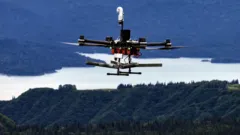
Drones are introducing a new level of precision and efficiency to cloud seeding, allowing for more targeted interventions than traditional aircraft. Previously, seeding was largely dependent on large planes, but the advent of Unmanned Aerial Vehicles (UAVs) allows operators to fly directly into the heart of clouds with greater control. As Meyer notes, drones offer a more targeted nature to these clouds, which may be more responsive to the intervention.
The primary advantage of drones is their ability to navigate the specific layers of a cloud where seeding is most effective. Companies like Rainmaker use drones equipped with silver iodide flares. When these flares are ignited, the burning process atomizes the silver iodide, allowing the particles to remain suspended in freezing clouds for several hours. This suspension is critical, as it provides the necessary time for the particles to transform into ice crystals and eventually fall as precipitation. This technological shift allows companies to operate in diverse regions, from the US states of Idaho, Utah, and Colorado to water-scarce areas like Jordan.
The move toward biodegradable alternatives
As the industry matures, there is a noticeable shift toward finding more environmentally friendly seeding agents. Recast Systems, a San Francisco-based startup, is currently testing a protein made from amino acids found in soil. According to CEO Olivia Li, this protein is not only biodegradable but also nucleates ice at a higher efficiency than silver iodide. This innovation, currently undergoing testing at Texas A&M University, represents a potential turning point for an industry facing increasing scrutiny over its chemical footprint.
The transition toward these alternatives is driven by the need to address the 'thorny questions' of safety and efficacy that continue to face the sector. While silver iodide has been effective, the ability to use safer, more efficient materials could help these businesses navigate the regulatory and environmental challenges that currently surround weather modification. As the industry moves forward, the goal is to find the right materials and the best methods to deliver precipitation without compromising the health of the ecosystems they aim to support.
Frequently asked questions
Is cloud seeding safe for humans and the environment?
Proponents argue that the chemical concentrations used are extremely low. For instance, Rainmaker reports that silver iodide concentrations on the ground reach only parts per quadrillion, which is well below FDA safety limits. However, environmentalists like Cooper Freeman remain concerned about the lack of downstream monitoring to verify that these chemicals do not impact the environment.
Does cloud seeding create new rainstorms?
No, cloud seeding does not create rain out of thin air. The technology requires existing clouds to function. It works by enhancing the precipitation process within clouds that are already present, essentially 'squeezing' an extra 5% to 10% of moisture out of the system.
Why are drones being used instead of planes?
Drones offer a more targeted approach to weather modification. They can be flown directly into specific cloud formations, allowing for more precise dispersal of seeding agents. This precision helps improve the efficacy of the process compared to the broader dispersal methods used by traditional aircraft.
What is the main chemical used in cloud seeding?
Silver iodide is currently the most common substance used in cloud seeding because it is more effective than the dry ice used in the 1940s. However, newer companies are exploring biodegradable proteins made from amino acids to replace silver iodide and reduce environmental risks.
How much water can cloud seeding actually produce?
The volume produced is often much smaller than the total water needs of a region. For example, a recent experiment produced 19 million gallons, but this only resulted in about 0.01 inch of rain over 100 square miles. It is a supplemental tool rather than a primary solution.
Key takeaways
- Cloud seeding increases precipitation by roughly 5% to 10% under ideal atmospheric conditions.
- Silver iodide is the standard seeding agent, though biodegradable protein alternatives are being tested.
- Drones enable more precise and targeted cloud seeding compared to traditional aircraft.
- The technology requires pre-existing clouds and cannot generate weather from dry air.
- Global water scarcity is driving increased investment in weather modification across 50 countries.
The future of weather modification
The trajectory of cloud seeding technology is moving toward greater precision and environmental compatibility. While the current reliance on silver iodide faces valid scrutiny regarding ecological safety, the development of amino acid-based proteins offers a promising path forward. As global water demand continues to outpace natural replenishment, the industry's ability to provide targeted, safe, and efficient precipitation enhancement will become increasingly vital for water-stressed regions worldwide.