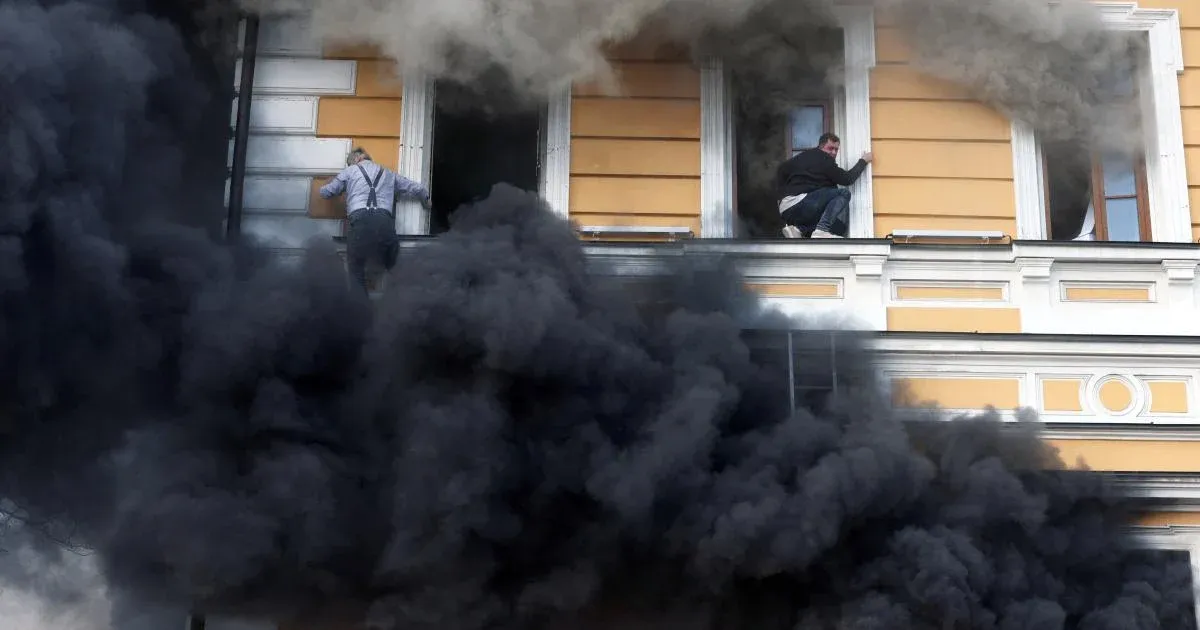
A Palestinian taxi driver recounts the harrowing experience of surviving a violent assault by a right-wing mob in the heart of Jerusalem. This targeted attack occurred as Israel faces escalating protests and social tension over Prime Minister Benjamin Netanyahu's controversial judicial overhaul. The driver describes the terrifying moments when the crowd turned aggressive, leaving him shaken by the sudden surge of hostility. As political divisions deepen across the country, such incidents highlight the growing volatility on the streets. This personal testimony provides a chilling look at the human cost of the current unrest.
What happened during the Palestinian taxi driver attack?
A Palestinian taxi driver was targeted and assaulted by a group of right-wing protesters in Jerusalem earlier this week. The victim recounted the experience of being caught in the middle of a violent mob, describing the immediate danger faced while operating his vehicle in the city. The attack took place amidst a broader wave of civil disobedience and social tension that has gripped the nation as protests continue to spread.
According to CNN's Nic Robertson, the driver's account provides a firsthand perspective on the physical risks faced by Palestinian residents during periods of heightened Israeli political instability. The assault was characterized by the aggressive behavior of the mob, which was part of the larger demonstrations occurring in the capital. The incident highlights the vulnerability of individuals caught in the crosshairs of intense political demonstrations, where the lines between political protest and targeted violence can become blurred.
The driver's testimony serves as a visceral reminder of the human cost associated with the current unrest. As the city of Jerusalem becomes a focal point for both domestic political struggle and ethnic tension, the safety of those navigating the streets—regardless of their political affiliation—has become increasingly precarious. The attack was not merely a localized incident of civil disobedience but a manifestation of the volatile atmosphere surrounding the government's legislative agenda.
Why are protests against Benjamin Netanyahu's judicial overhaul spreading?
Protests in Israel have surged in response to Prime Minister Benjamin Netanyahu's government attempting to implement a significant judicial overhaul. This legislative package has sparked widespread concern regarding the balance of power between the judiciary and the executive branch of the government. Opponents of the plan argue that the reforms could undermine the democratic foundations of the state by weakening the courts' ability to check government authority.
The movement against the overhaul has become a central point of contention in Israeli society, leading to large-scale demonstrations that have moved across various cities. The scale of the unrest reflects a deep division within the population over the future direction of the country's legal and political systems. As the government pushes forward with these changes, the frequency and intensity of the demonstrations have increased, signaling a sustained period of civil unrest.
The spread of these protests is driven by a sense of urgency among critics who believe the window for preventing these changes is closing. The demonstrations have not only attracted political activists but also a broad cross-section of the Israeli public, ranging from legal experts to everyday citizens concerned about the long-term implications for democratic governance. This widespread mobilization has turned the streets into a primary theater for a struggle that is fundamentally about the nature of Israeli democracy.
The core arguments of the judicial overhaul
The proposed reforms aim to change how judges are appointed and how the Supreme Court can intervene in government decisions. Supporters of the measure suggest it is necessary to restore balance to the state's institutions, while critics view it as an attempt to consolidate power within the hands of the current administration. This fundamental disagreement has fueled the intensity of the street protests and the resulting social friction.
The debate centers on the very structure of Israeli governance. For those backing Netanyahu, the overhaul is a corrective measure intended to address perceived imbalances in the current system. For those protesting, it is a direct threat to the independence of the judiciary and the ability of the courts to serve as a check on executive power. This clash of ideologies has transformed the streets of Israel into a primary arena for political struggle, where the legal future of the nation is being contested through mass mobilization.
The complexity of the overhaul means that the arguments are often technical, yet the consequences are viewed as existential. Supporters argue that the current judicial system holds too much unchecked power, whereas opponents contend that removing these checks will lead to an era of unchecked executive authority. This deadlock has left the nation in a state of profound political uncertainty, with no clear consensus on how to move forward without further escalating the social divide.
How does this attack reflect broader social tensions in Jerusalem?
The attack on the taxi driver serves as a flashpoint for the intersection of political unrest and ethnic tension in Jerusalem. While the primary driver of the protests is the judicial overhaul, the presence of right-wing mobs has created an environment where Palestinian citizens and residents are increasingly vulnerable to violence. The incident demonstrates how political volatility can spill over into targeted aggression against specific groups.
Jerusalem remains a highly sensitive location where political demonstrations often intersect with existing territorial and ethnic complexities. The escalation of violence during these protests suggests that the political crisis is exacerbating existing societal fault lines, making the city a volatile epicenter for both domestic and international concern. The driver's experience is a manifestation of how national political disputes can manifest as direct, physical threats to minority populations within the city.
This intersection of issues means that the judicial crisis is not occurring in a vacuum; it is layered on top of long-standing tensions regarding identity and rights in Jerusalem. When right-wing groups mobilize in response to government policy, the resulting friction often finds targets in the city's Palestinian population. Consequently, the political fight over the judiciary is inextricably linked to the broader, more volatile struggle for control and recognition within the city itself.
What is the impact of the unrest on daily life and security?
The ongoing protests and the resulting civil disobedience have significantly impacted daily life and the security landscape in Israel. For residents and workers, such as the taxi driver involved in the assault, the risk of being caught in political violence has increased. This creates an atmosphere of unpredictability that affects transportation, commerce, and general public safety.
The security situation is further complicated by the scale of the demonstrations, which require significant law enforcement resources to manage. As the protests continue to evolve, the potential for localized incidents of violence remains high, affecting the stability of urban centers. The unpredictability of mob behavior and the frequency of large-scale gatherings mean that daily routines in cities like Jerusalem are subject to sudden disruption and heightened risk.
Beyond the immediate physical danger, there is a psychological impact on the population. The constant state of unrest and the threat of spontaneous violence create a sense of instability that permeates all aspects of life. For the business community, transportation sectors, and service workers, the ongoing demonstrations represent a continuous challenge to maintaining normalcy. The difficulty of ensuring safety while allowing for the right to protest remains a central challenge for the state's security apparatus.
Frequently asked questions
What triggered the protests in Israel?
The protests were triggered by the Israeli government's plan to implement a judicial overhaul. This legislative move, led by Prime Minister Benjamin Netanyahu, seeks to change the power of the judiciary, causing widespread fear among citizens that democratic checks and balances could be permanently weakened.
Who was involved in the attack on the taxi driver?
The attack involved a Palestinian taxi driver who was targeted by a right-wing mob in Jerusalem. The driver survived the assault, which occurred during the height of the national protests against the government's judicial reform policies and the resulting civil unrest.
Is the judicial overhaul still a major issue in Israel?
Yes, the judicial overhaul remains a central and highly divisive issue in Israeli politics. The debate over the reforms continues to drive large-scale demonstrations and has become a defining factor in the country's current social and political climate.
How has the security situation changed due to these protests?
The security situation has become more volatile as protests have grown in scale and frequency. The rise in civil disobedience and the occurrence of targeted attacks, such as the one against the Palestinian driver, indicate increased risks for both protesters and bystanders.
What is the role of Benjamin Netanyahu in this crisis?
Benjamin Netanyahu is the Prime Minister of Israel and the primary architect of the judicial overhaul. His administration's push for these reforms is the direct cause of the widespread protests and the intense political polarization currently seen across the country.
Key takeaways
- A Palestinian taxi driver survived a violent attack by a right-wing mob in Jerusalem.
- The attack occurred amidst widespread protests against Benjamin Netanyahu's judicial overhaul.
- The judicial reform plan has caused significant political and social division in Israel.
- The unrest highlights increased risks for Palestinian residents during periods of Israeli political volatility.
Conclusion
The attack on the Palestinian taxi driver is a stark illustration of the heightened volatility within Israel as the nation grapples with the judicial overhaul. While the protests are fundamentally a political struggle over the structure of government, the resulting social friction has led to direct physical confrontations. The incident in Jerusalem underscores how political instability can exacerbate ethnic tensions, creating a dangerous environment for residents. As the debate over Netanyahu's reforms continues, the intersection of political unrest and civil violence remains a critical concern for regional stability and public safety.