The Japan-United States alliance is approaching a critical inflection point as Tokyo undergoes a historic transformation in its security posture. Japan has nearly doubled its defense budget, acquired long-range strike capabilities, and embraced more active combat roles to bolster Indo-Pacific stability. This shift aims to increase the durability of American power at a lower cost to Washington. However, recent U.S. policy delays and strategic withdrawals threaten to undermine this partnership. This article examines Japan's evolving defense strategy, the impact of Chinese coercion, and the risks of American complacency in the region.
How is Japan transforming its traditional pacifist defense posture?
Japan is fundamentally reshaping its national security architecture by moving away from the postwar division of labor that once saw Tokyo focus on economic growth while Washington guaranteed security. The Japanese government has significantly increased its military investment, nearly doubling its defense budget to meet modern threats. This expansion includes the acquisition of long-range missiles capable of reaching targets in China and North Korea, as well as the lifting of long-standing prohibitions on the export of lethal weapons.
Beyond hardware, Tokyo is expanding its operational reach through several key initiatives:
- Reciprocal Access Agreements: Japan has signed military cooperation pacts with Australia, the Philippines, and the United Kingdom, facilitating joint training and operations.
- Multilateral Participation: For the first time in the postwar era, Japanese troops have participated in combat roles during joint exercises with the Philippines, including firing surface-to-ship missiles from Philippine soil.
- Industrial Security: Japan is leveraging its industrial strength to build international partnerships, such as developing sixth-generation fighter jets with Italy and the UK and building frigates for Australia.
- Unified Command: In 2025, Japan established a permanent Joint Operations Command to integrate land, sea, air, and cyberspace operations, enabling better real-time coordination with U.S. forces.
The shift toward collective self-defense
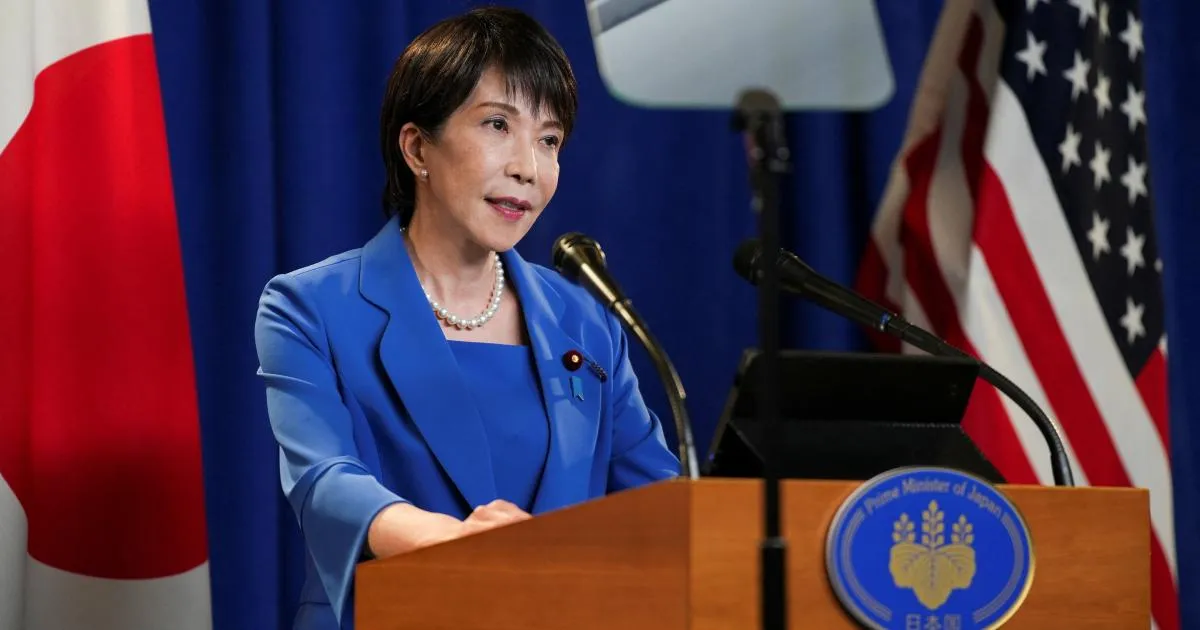
The political taboo surrounding the revision of Article 9 of the Japanese constitution is fading. Prime Minister Sanae Takaichi has signaled that a Chinese blockade of Taiwan could be classified as a "survival-threatening situation." Such a designation would provide the legal framework for Japan to exercise collective self-defense, a move supported by a majority of the Japanese public who recognize the proximity of Japan's westernmost islands to the Taiwan Strait.
What external pressures are driving Japan's security evolution?
A series of external shocks and coercive tactics from regional powers have forced Japanese leadership to reconsider the reliability of international security guarantees. The 2010 rare-earth mineral embargo imposed by Beijing served as an early warning regarding the weaponization of supply chains. Since then, the perceived lack of decisive U.S. action in Syria and the South China Sea has led Tokyo to question the absolute credibility of American commitments.
The geopolitical landscape has been further destabilized by several key events:
- The Invasion of Ukraine: The 2022 Russian invasion demonstrated that territorial borders remain vulnerable to great-power aggression.
- Taiwan Strait Tensions: Following high-level U.S. visits to Taiwan, aggressive Chinese military exercises underscored that a cross-strait conflict is a tangible risk rather than a theoretical one.
- Direct Intimidation: The landing of Chinese missiles within Japan's exclusive economic zone has brought the threat of conflict closer to the Japanese mainland.
In response, Japan has pursued the "Free and Open Indo-Pacific" strategy, working through frameworks like the Quad to protect maritime law and undersea infrastructure. This strategy is not about seeking strategic autonomy from the United States, but rather about making the alliance more resilient against a highly capable China.
Why is the current U.S. approach viewed as a risk to the alliance?
Despite Japan's efforts to become a more capable partner, Washington has frequently failed to provide the visible, consistent support necessary to solidify this new era of cooperation. Critics argue that American policy has been characterized by a degree of complacency and dismissiveness that could drive Tokyo to reconsider its long-term orientation. Recent actions have created a sense of uncertainty regarding U.S. reliability in the Indo-Pacific.
Several specific developments have strained the bilateral relationship:
- Weaponry Delays: Washington informed Tokyo in May 2026 that the delivery of purchased Tomahawk missiles would be delayed due to the conflict in Iran.
- Strategic Withdrawals: The temporary relocation of the only U.S. aircraft carrier permanently deployed outside the United States from East Asia to the Middle East has signaled a potential shift in focus.
- Diplomatic Silence: When Prime Minister Takaichi faced a Chinese coercion campaign following her comments on Taiwan in late 2025, Washington did not forcefully defend her position in public.
- Reduced Engagement: The scaling back of joint exercises with South Korea and the omission of Taiwan from key security dialogues, such as the Shangri-La Dialogue, have cast doubt on American resolve.
The danger of perceived American decline
Rhetoric and perceived actions matter significantly in the Indo-Pacific. If China perceives a decline in American commitment, it may view its own regional dominance as inevitable. For Japan, these signals are not merely diplomatic nuances; they are indicators of whether the security umbrella provided by the United States remains intact. A failure to prioritize the relationship could lead to a breakdown in the very deterrence the alliance is meant to provide.
What are the potential consequences if the alliance weakens?
If the U.S.-Japanese relationship continues to experience instability, Japan may be forced to pursue a more independent and potentially more dangerous foreign policy. The authors suggest that an uncertain Tokyo would have to reassess its relationships with major powers to ensure its own survival, which could lead to outcomes that run directly contrary to American strategic interests.
Potential shifts in Japanese policy include:
- Rapprochement with Adversaries: To secure energy and reduce northern flank pressure, Japan might seek to accommodate Russia or improve ties with the military junta in Myanmar for mineral access.
- Resource Realignment: Japan could explore purchasing discounted Iranian oil to meet energy needs.
- Withdrawal from Taiwan Support: Without the assurance of U.S. extended deterrence, Japan might be forced to pull back its support for Taiwan, leaving the island more vulnerable.
- Nuclear Proliferation: Most significantly, if Japan concludes that it can no longer rely on the U.S. nuclear umbrella, it may seek to develop its own nuclear weapons to counter the arsenals of China, North Korea, and Russia.
Such a development would likely trigger a nuclear arms race in the region, with South Korea potentially following suit, turning the Indo-Pacific into a "nuclear powder keg." The stability of the entire region depends on whether Washington chooses to embrace or ignore Japan's increased capacity to share the burden of regional security.
Frequently asked questions
How has Japan's defense budget changed recently?
Japan has nearly doubled its defense budget in response to increasing regional tensions. This funding supports the acquisition of advanced technology, such as long-range missiles and sixth-generation fighter jets, as well as the expansion of its maritime and territorial defense capabilities to deter Chinese and North Korean aggression.
What is the significance of the "Free and Open Indo-Pacific" strategy?
This strategy, championed by Japan, seeks to maintain a rules-based order in the Indian and Pacific Oceans. It emphasizes freedom of navigation, the rule of law, and free trade, aiming to connect regional partners through shared security and economic interests to counter unilateral changes to the status quo.
Why are Tomahawk missiles important to Japan?
The procurement of 400 Tomahawk cruise missiles represents a major shift in Japan's strike capability. These weapons allow Tokyo to project power and provide a deterrent against potential maritime blockades or incursions, specifically in the context of a conflict involving the Taiwan Strait.
Could Japan develop nuclear weapons?
While not currently a stated policy, the possibility exists if Japan perceives that U.S. extended deterrence is no longer reliable. Given the nuclear capabilities of China, North Korea, and Russia, a move toward nuclearization by Japan would likely trigger a regional arms race, including in South Korea.
How does the Taiwan Strait affect Japanese security?
Japan's westernmost islands, such as Yonaguni, are located only 70 miles from Taiwan. Consequently, any conflict or blockade in the Taiwan Strait is viewed by Tokyo as a direct threat to its national survival, necessitating increased military readiness and infrastructure in the Ryukyu Islands.
Key takeaways
- Japan is significantly increasing its defense spending and expanding its military roles to bolster regional security.
- The U.S.-Japanese alliance is at a critical juncture due to perceived American inconsistency in the Indo-Pacific.
- Japan is moving toward a more active defense posture, including the possibility of collective self-defense.
- A breakdown in the alliance could lead to Japanese nuclearization and regional instability.
Conclusion
The evolving security landscape in the Indo-Pacific demands a more ambitious and visible partnership between Washington and Tokyo. Japan is no longer a passive recipient of security; it is an active contributor willing to shoulder greater responsibility and financial burdens. However, this momentum is fragile. If the United States continues to allow delays in military cooperation and fails to provide consistent diplomatic support, it risks driving Japan toward a more autonomous and potentially volatile foreign policy. Strengthening the U.S.-Japanese alliance is not merely a bilateral preference but a strategic necessity for maintaining stability in the world's most consequential region.