The Taiwan crisis is entering a period of deceptive calm as Beijing shifts its strategic focus away from immediate military confrontation. While previous forecasts identified 2027 as the critical year for potential conflict, recent shifts in Chinese leadership purges and political maneuvering suggest a different timeline. Current tensions are driven by Xi Jinping's hope for political annexation rather than a catastrophic invasion. This article examines why the 2028 elections in both the United States and Taiwan represent the true flashpoint for cross-strait stability and what Washington must do to prepare.
Why has the immediate threat of conflict in the Taiwan Strait subsided?
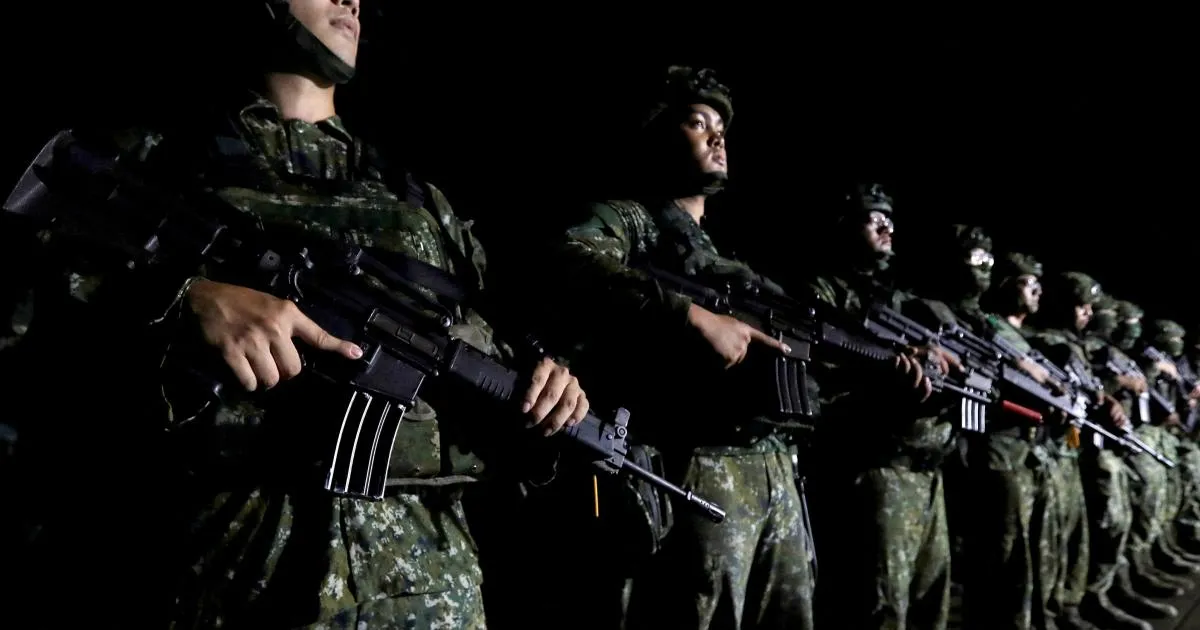
Beijing has recently avoided the large-scale military exercises that characterized its response to the 2022 visit of former U.S. Speaker Nancy Pelosi. This relative quietude stems from a renewed sense of optimism within the Chinese leadership regarding their ability to manage both Washington and Taipei through political means. While Chinese fighter jets and warships continue to operate near the island, the intensity of coercive maneuvers has shifted from overt military displays to more systematic, bureaucratic pressures.
This shift is also reflected in the internal restructuring of the People's Liberation Army (PLA). Xi Jinping has been willing to conduct extensive purges of his military high command, a move that suggests he does not perceive an imminent cross-strait military crisis requiring a stable, un-purged command structure. Instead, the focus has turned toward long-term organizational readiness rather than immediate tactical deployment.
The shift from military coercion to political maneuvering
For years, the international community viewed 2027 as the deadline for a potential Chinese invasion, following Xi Jinping's directive for the PLA to be prepared for confrontation by that date. However, the current landscape suggests that Beijing is prioritizing the political integration of Taiwan. By avoiding high-profile military escalations that might trigger a massive U.S. response, China seeks to maintain a veneer of stability while working to undermine Taiwan's sovereignty through political and economic channels.
How will the 2028 elections reshape the cross-strait dynamic?
The year 2028 is emerging as the most significant pivot point for the Taiwan crisis because it encompasses presidential elections in both the United States and Taiwan. These elections will determine the political trajectory of the region and whether Beijing's long-term strategy of political annexation succeeds or fails. Xi Jinping's current strategy is heavily predicated on the hope that the Kuomintang (KMT) will return to power in Taiwan, offering a more conciliatory approach to Beijing than the ruling Democratic Progressive Party (DPP).
The outcome of the 2028 elections represents a high-stakes gamble for the Chinese leadership. If the DPP secures another term, it would signal a definitive rejection of Beijing's influence by the Taiwanese electorate. Conversely, a KMT victory—particularly under a leader aligned with Beijing's preferences—could provide the political opening Xi has sought for over a decade. This makes the next two years a critical window for diplomatic and military preparations.
The KMT's precarious position in Beijing's strategy
The appointment of Cheng Li-wun as Kuomintang chair in November 2025 provided a momentary boost to Beijing's optimism. Cheng has advocated for dialogue based on shared cultural identity, a stance that contrasts sharply with the DPP's emphasis on Taiwan's distinct sovereignty. However, her political standing remains fragile. With only 27 percent of the population supporting the KMT, any candidate seen as too subservient to Beijing faces significant domestic backlash. Xi's reliance on the KMT as a 'linchpin' for stability is therefore a strategy built on potentially unstable political ground.
What are the risks of Beijing's coercive tactics?
Beijing's strategy relies on the belief that continuous, incremental pressure will eventually convince the Taiwanese people that the status quo is unsustainable and that annexation is inevitable. This approach involves maritime harassment, frequent airspace incursions, and the use of the coast guard to assert control over the waters surrounding the island. The goal is to establish a reality where Taiwan's connection to the outside world is perceived to be contingent upon Beijing's permission.
However, history suggests that such coercion can backfire. During the third Taiwan Strait crisis in the 1990s, increased Chinese threats actually catalyzed support for the DPP, leading to their first presidential victory in 2000. A similar 'rally-around-the-flag' effect could occur if Xi Jinping attempts to escalate beyond current levels. If Beijing moves toward more punitive actions—such as disrupting international maritime traffic or intercepting arms deliveries—it may inadvertently strengthen the very independence it seeks to suppress.
The limits of incremental pressure
While Xi Jinping has shown a preference for steady, incremental pressure over sudden, decisive blows, the margin for error is narrowing. As he enters his fourth term, he may feel increased pressure to deliver results to secure his legacy. If the 2028 elections do not yield the political concessions Beijing desires, the temptation to move toward a full blockade or quarantine will grow. Such an escalation would force a global crisis, testing the resolve of U.S. allies and the stability of international trade routes.
What role should the United States play in preparing for the crisis?
Washington must focus on strengthening its partnership with Taipei to ensure the island is prepared for a more turbulent period after 2028. This involves both military support and the reinforcement of diplomatic commitments. A key component of this preparation is the approval of arms sales, which serve as a tangible signal of U.S. resolve. Even if these sales are conducted in smaller tranches to avoid immediate escalation, they are essential to prevent Beijing from establishing a de facto veto over U.S. security assistance.
The current administration faces the challenge of balancing support for Taiwan with the need to manage the broader U.S.-China relationship. However, forgoing arms sales carries long-term costs, as it may signal to both Taipei and Beijing that U.S. support is conditional or wavering. As the political landscape in both Washington and Taipei shifts in 2028, the groundwork laid today will determine whether the U.S. can effectively deter Chinese aggression or respond to a crisis in the Taiwan Strait.
FAQ: Taiwan Crisis and Geopolitical Outlook
Why is 2028 considered more critical than 2027?
While 2027 was previously identified as a potential year for military action, 2028 is the year of dual presidential elections in both the United States and Taiwan. These elections will dictate the political direction of both nations and determine if Beijing's preferred political path for Taiwan can be realized or if resistance will intensify.
What is the Kuomintang's role in this tension?
The Kuomintang (KMT) is the primary opposition party in Taiwan that Beijing views as a more viable partner for dialogue than the ruling DPP. Xi Jinping's strategy relies on the hope that the KMT will regain power and offer a more conciliatory stance toward the mainland, facilitating political integration.
How does the U.S. respond to Chinese maritime pressure?
The United States responds by maintaining its security commitments to Taiwan, including the sale of defensive weaponry. Experts suggest that approving arms packages, even in stages, is vital to prevent China from successfully pressuring the U.S. to abandon its support for the island's defense.
Can China achieve annexation without a full-scale war?
Beijing's ultimate goal is political annexation, which is less costly and catastrophic than a military invasion. They aim to achieve this through a combination of economic pressure, maritime coercion, and political maneuvering designed to make the current status quo appear unsustainable to the Taiwanese people.
What happens if the DPP wins again in 2028?
A second victory for the Democratic Progressive Party (DPP) would likely devastate Beijing's hope for a peaceful political solution. It would signal a continued rejection of Chinese influence by the Taiwanese electorate, potentially pushing Xi Jinping toward more aggressive or coercive military measures to achieve his goals.
Key takeaways
- The 2028 elections in Taiwan and the U.S. are the true upcoming flashpoints for cross-strait stability.
- Xi Jinping is currently prioritizing political annexation over immediate, large-scale military invasion.
- Beijing's strategy relies heavily on the hope of a Kuomintang victory in Taiwan.
- U.S. arms sales are a critical tool for maintaining deterrence and preventing Chinese influence.
- Incremental coercion by China risks triggering a 'rally-around-the-flag' effect in Taiwan.
Conclusion
The current calm in the Taiwan Strait is not a sign of resolving conflict, but rather a shift in Chinese strategy toward political maneuvering. As Xi Jinping prepares for his fourth term, his focus remains on achieving reunification through political means, with 2028 serving as the ultimate test of this approach. For the United States, the coming years are a vital window to reinforce its alliance with Taipei. Failure to bolster Taiwan's defenses and diplomatic standing now could leave Washington ill-prepared for the heightened turbulence that is likely to follow the 2028 election cycle.