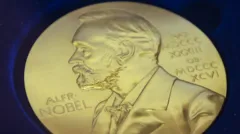
Henri B. Kagan and Kenso Soai have been awarded the Nobel Prize for uncovering how nature selectively produces the specific mirror-image molecules essential for life. This fundamental discovery addresses the profound mystery of biological asymmetry, explaining why life favors one molecular orientation over another. By mastering the principles of chirality, these scientists have provided the tools necessary to understand the very building blocks of existence. Their groundbreaking research offers a roadmap for controlling molecular handedness, which is vital for the development of complex chemical systems and the advancement of modern biotechnology.
Why is chirality a fundamental mystery in chemistry?
Chirality refers to the property of molecules that exist in two forms that are mirror images of each other, much like a person's left and right hands. While these forms look nearly identical, they are not superimposable. In a standard laboratory setting, chemical reactions typically produce a racemic mixture, which is an equal 50-50 split of both left-handed and right-handed molecules.
The mystery lies in the fact that life on Earth does not follow this pattern. Biological systems are homochiral, meaning they rely almost exclusively on one specific version of a molecule to function. For instance, the amino acids that build proteins in our bodies exist in two mirror-image forms, yet life has chosen only one. Solving how this preference emerged spontaneously has been a central question in organic chemistry for over a century. Heiner Linke, chair of the Nobel Committee for Chemistry, noted that the laureates provided a solution to this century-old mystery regarding how homochirality—the selective production of the correct version of a molecule—can emerge spontaneously. He described the chemical reactions they have developed as "spectacular."
Understanding the concept of mirror images
To visualize chirality, one can look at the human hand. Your left hand is a mirror image of your right hand, but you cannot perfectly overlay one on top of the other with the palms facing the same direction. In chemistry, these mirror-image versions are known as enantiomers. While they may share many physical properties, their interaction with other chiral objects—such as the receptors in a human body—can be radically different.
This distinction is not merely academic; it has profound implications for human health. When making drugs, the version of a molecule matters immensely because each version behaves differently when it interacts with our bodies. One version might possess disease-fighting properties, while the other version might do nothing at all or even cause significant harm. This phenomenon is a cornerstone of modern pharmacology and safety, as different isomers can have completely different biological and physical effects.
The tragic lesson of Thalidomide
The significance of molecular asymmetry is perhaps most famously illustrated by the development of the drug Thalidomide. In the 1950s, Thalidomide was prescribed to pregnant women to treat morning sickness. However, the drug is a chiral molecule: the right-handed version acts as an effective treatment, but the left-handed version is toxic.
Because the original drug was provided as a mixture of both mirror images, and because the human body can convert between the two versions, the consequences were devastating. The result was that thousands of children, born to women who had taken the drug, developed severe disabilities. This historical tragedy underscores why understanding and controlling chirality is so vital for the development of effective and safe medicines, as it demonstrates how a single mirror-image variation can change a substance from a remedy to a toxin.
How did Kagan and Soai solve the problem of homochirality?
The Nobel Committee for Chemistry recognized Henri B. Kagan and Kenso Soai for developing chemical reactions that can mimic the selective production found in nature. Their work provides a pathway to design reactions that produce a significant excess of a desired molecular version, a feat previously thought impossible in a controlled laboratory environment. The committee stated that, "Other than life itself," no one had previously achieved the feat of producing only the desired version of an organic molecule through such means.
The journey toward this solution spanned several decades of incremental breakthroughs. Henri Kagan, based at Université Paris-Sud, made a significant leap in 1986 by discovering a new way of manipulating chemical reactions. This allowed him to create a greater excess of one of the mirror images than had previously been thought possible, laying the groundwork for controlling molecular symmetry. His discovery fundamentally changed how researchers approached the manipulation of these mirror-image pairs.
Kenso Soai, from the Tokyo University of Science, took the next step in the pursuit of homochirality. In 1995, he published a scientific paper in the journal Nature describing the first chemical reaction that had the potential to be homochiral—meaning it had the potential to produce only the desired version of an organic molecule. By 2003, Soai finally succeeded in controlling a reaction in which only one of the two possible mirror images was formed. Speaking at the Nobel Prize press conference, Soai described the recognition as "one of the most exciting days of my life." He also took the opportunity to praise the "many, many excellent researchers" working in this field.
The broader implications for science and society
The implications of this discovery extend far beyond the laboratory. Professor Robert Mokaya, president of the UK's Royal Society of Chemistry, remarked that this work is a "powerful example of how fundamental chemistry can underpin solutions to some of the biggest challenges facing society." He emphasized that because different isomers (or versions of molecules) can have completely different biological and physical effects, controlling them is crucial for finding effective medicines to treat a wide range of illnesses.
Furthermore, the research helps bridge the gap between chemistry and biology. Prof Angus Davison, from the University of Nottingham, noted that the Nobel-winning chemistry could help reveal why life favors "one-handedness." He explained that in ways we do not yet fully understand, the chirality of life's basic building blocks results in bodies that are themselves chiral. This fundamental asymmetry is what dictates that our hearts are positioned on the left side of our bodies and that snail shells coil to the right. This research provides a potential key to understanding how biological structures achieve such specific, directional forms.
A fundamental milestone in understanding life
Ultimately, the work of Kagan and Soai addresses one of the most profound questions in science. Peter Somfai, a member of the Nobel Committee for Chemistry, stated that this research has become part of "our basic understanding of how chemistry functions." He argued that understanding how a mirror image is created is perhaps the most fundamental question in life, as this process occurred approximately four billion years ago during the creation of life. By successfully mimicking this process in a laboratory setting, the researchers have provided a window into the very origins of biological existence, showing that the chemical foundations of life can indeed emerge from spontaneous, controlled asymmetry.
Key Takeaways
- Chirality refers to molecules that exist as non-superimposable mirror images, similar to human hands.
- Life on Earth is homochiral, meaning it exclusively uses one version of mirror-image molecules like amino acids.
- Controlling chirality is vital for drug safety, as seen in the Thalidomide tragedy where one mirror image was therapeutic and the other toxic.
- Henri B. Kagan and Kenso Soai developed chemical reactions that can produce a specific mirror-image version, mimicking natural processes.
Frequently Asked Questions
What is chirality?
Chirality is a property of molecules that exist in two forms that are mirror images of each other. These forms, while similar, cannot be perfectly overlaid on one another.
Why does chirality matter in medicine?
Different versions (isomers) of a molecule can have different effects in the body. One version might treat a disease, while its mirror image might be ineffective or even harmful, as demonstrated by the Thalidomide tragedy.
What did the Nobel laureates achieve?
Henri B. Kagan and Kenso Soai developed ways to control chemical reactions so they produce only the desired mirror-image version of a molecule, a process known as homochirality.