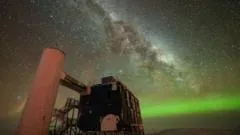
Francis Halzen has been awarded the Nobel Prize in Physics for his leadership in developing the IceCube Neutrino Observatory at the South Pole. This massive scientific instrument uses a cubic kilometre of Antarctic ice to detect neutrinos, often referred to as 'ghost particles,' which provide critical data on high-energy cosmic events. This breakthrough allows scientists to observe violent processes in the distant universe that are invisible to traditional telescopes. This article explores the mechanics of neutrino detection, the significance of Halzen's work, and the future of neutrino astronomy.
Why did Francis Halzen win the Nobel Prize in Physics?
Francis Halzen received the Nobel Prize for his pioneering role in creating the IceCube Neutrino Observatory, a facility that has fundamentally altered our ability to observe the cosmos. By utilizing the unique environment of the South Pole, Halzen led an international team to build a detector capable of capturing neutrinos—subatomic particles that rarely interact with matter.
The Royal Swedish Academy of Sciences noted that his scientific leadership and long-term vision were the driving forces behind the project. While the concept of using Antarctic ice for detection was first proposed by Halzen in 1988, the sheer scale and technical difficulty of the project meant that many in the scientific community were skeptical of its eventual success. Halzen himself admitted during a news conference that he was surprised by how effectively the project worked, noting that while the idea was considered good, few believed it would reach fruition.
The evolution of a scientific vision
The journey from a theoretical proposal in 1988 to a functioning cubic kilometre of sensor-filled ice represents decades of international collaboration. Halzen, currently a US citizen at the University of Wisconsin–Madison, steered the project through the immense logistical challenges of operating at the geographic South Pole. His tenacity is cited by the Nobel Committee as a key factor in paving the way for this new era of astronomy.
How does the IceCube Neutrino Observatory work?
The IceCube Observatory functions by embedding thousands of light sensors into a massive, cubic kilometre block of clear Antarctic ice. These sensors are attached to long cables that are drilled deep into the ice sheet and then frozen into place. The primary goal is to detect neutrinos, which are elusive particles that can pass through almost any material without leaving a trace.
While the Sun produces an immense number of neutrinos—billions passing through a fingernail-sized area every second—IceCube is specifically designed to hunt for much higher-energy neutrinos. These high-energy particles originate from violent, high-energy processes in distant galaxies, far beyond our own Solar System. Because neutrinos have no electric charge, they are not deflected by magnetic fields, allowing them to travel in straight lines from their source to Earth.
The mechanics of a neutrino strike
The detection process relies on rare, specific interactions. Most neutrinos pass through the ice completely unnoticed. However, on rare occasions, a neutrino will strike an atomic nucleus within the ice. This collision produces fast-moving charged particles that emit a distinct blue glow, known as Cherenkov radiation. By measuring the pattern and timing of this light, scientists can calculate the direction from which the neutrino arrived, effectively tracing its path back to its cosmic origin.
What makes neutrinos important for modern astronomy?
Neutrinos act as 'astronomical messengers' that provide a window into parts of the universe that are otherwise inaccessible. Because they interact so weakly with matter, they can penetrate dense regions of space—such as the environments surrounding black holes or the cores of exploding stars—that block light and other forms of electromagnetic radiation.
According to Louis Barson, director of science at the Institute of Physics in London, the IceCube Observatory has enabled astronomers to investigate phenomena that conventional telescopes simply cannot see. By studying these particles, researchers can gain insights into the most energetic and mysterious processes in the universe. This includes understanding how particles are accelerated to extraordinary energies in the vicinity of giant black holes and during supernova events.
Overcoming the limitations of light-based telescopes
Traditional astronomy relies heavily on the electromagnetic spectrum, including visible light, X-rays, and radio waves. However, many of the universe's most violent events are shrouded in dust or are so dense that light cannot escape. Neutrinos bypass these obstacles, offering a transparent view of the high-energy universe. This capability transforms our understanding of cosmic evolution and the fundamental physics governing extreme environments.
What is the impact of Halzen's work on the scientific community?
The impact of Professor Halzen's work extends beyond the mere discovery of particles; it has established an entirely new branch of observational astronomy. As Prof Mark Pearce, Chair of the Nobel Committee for Physics, stated, Halzen's leadership has provided the scientific community with a 'fantastic instrument' that has paved the way for a new kind of cosmic investigation.
The discovery of these 'ghost particles' has allowed for a deeper interrogation of the universe's most violent occurrences. Prof Subir Sarkar of the University of Oxford highlighted the transformative nature of this work, suggesting that Halzen has provided humanity with 'other eyes' to behold the universe. This sentiment reflects the shift from seeing the universe through light to seeing it through the lens of particle physics.
A new era of multi-messenger astronomy
The success of IceCube marks the beginning of an era where scientists combine data from light, gravitational waves, and neutrinos to form a complete picture of cosmic events. This multi-messenger approach is only possible because of the foundation laid by Halzen and his team, allowing for a more holistic and accurate understanding of the laws of physics in extreme conditions.
FAQ: Frequently asked questions
What are neutrinos often called in science?
Neutrinos are frequently referred to as 'ghost particles' because of their elusive nature. They possess very little mass and no electric charge, allowing them to pass through vast amounts of matter, including the entire Earth, without interacting with almost anything.
Why was Antarctica chosen for the IceCube observatory?
Antarctica was selected because it provides a massive, naturally occurring volume of extremely clear ice. This enormous, stable block of ice is necessary to increase the statistical probability of a neutrino striking an atomic nucleus and producing a detectable flash of light.
Can neutrinos help us find black holes?
Yes, neutrinos can provide clues about the environments around giant black holes. Because high-energy neutrinos are produced during violent cosmic processes, tracing their origin can lead scientists to the extreme environments where black holes are actively accelerating particles to massive energies.
How do scientists know where a neutrino came from?
When a neutrino hits an atomic nucleus in the ice, it creates a trail of charged particles that emit blue light. By using sensitive sensors to track the timing and direction of this light, scientists can reconstruct the neutrino's original path back to its source.
Is the IceCube project still relevant today?
The project remains highly relevant as it continues to provide data that conventional telescopes cannot capture. It has opened a new window into the universe, allowing for the study of high-energy processes that were previously invisible to the scientific community.
Key takeaways
- Francis Halzen won the Nobel Prize for leading the development of the IceCube Neutrino Observatory.
- IceCube uses a cubic kilometre of Antarctic ice to detect high-energy neutrinos from distant galaxies.
- Neutrinos are called 'ghost particles' because they rarely interact with matter and can pass through dense objects.
- The observatory detects neutrinos by capturing the blue light produced when a particle strikes an atomic nucleus.
- This technology allows scientists to study cosmic events that are invisible to traditional light-based telescopes.
Conclusion
The recognition of Francis Halzen with the Nobel Prize in Physics underscores a monumental shift in our approach to the cosmos. By turning the Antarctic ice sheet into a massive scientific instrument, Halzen has enabled humanity to perceive the universe through a lens previously thought impossible. The IceCube Neutrino Observatory does more than just detect particles; it provides a direct link to the most violent and energetic phenomena in existence. As neutrino astronomy continues to evolve, the insights gained from these 'ghost particles' will undoubtedly continue to reshape our fundamental understanding of the universe and the physics that governs it.