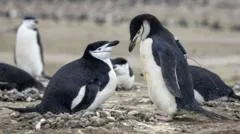
The chinstrap penguin decline on Zavodovski Island has reached alarming levels. Researchers report a 63% reduction in occupied nests between 2011 and 2025. This massive loss has stripped the remote volcanic island of its status as the world's largest penguin colony. According to the British Antarctic Survey, the collapse is primarily driven by climate-induced shifts in food availability. While chinstrap numbers plummet, macaroni penguins are thriving due to dietary flexibility. This article examines the environmental drivers, the role of warming oceans, and the changing composition of Antarctic ecosystems.
Why has the chinstrap penguin population collapsed on Zavodovski Island?
The chinstrap penguin population on Zavodovski Island has experienced a staggering 63% decrease in occupied nests when comparing 2025 data to 2011 levels. This decline has fundamentally altered the biological landscape of the South Sandwich Islands, a UK overseas territory located north of the Antarctic continent. Once celebrated by the British Antarctic Survey (BAS) as the site of the world's largest penguin colony, the island's dominance has ended as the species struggles to survive the changing environment.
In 2011, the island was estimated to host approximately 600,000 chinstrap penguins alongside 90,000 macaroni penguins. However, the most recent aerial surveys and satellite imagery conducted by the BAS research team confirm that the chinstrap numbers have fallen precipitously. This loss is not merely a local fluctuation but a signal of broader ecological instability in the sub-Antarctic region.
The scale of the loss
The reduction from the 2011 peak to the 2025 survey results represents one of the most rapid population drops observed in a major avian colony. Researchers note that the steady and ongoing nature of this decline suggests that the underlying causes are persistent rather than temporary environmental anomalies.
How is climate change driving the chinstrap penguin decline?
Climate change is the primary driver of the chinstrap penguin decline, specifically through the disruption of their specialized food supply. As ocean temperatures rise, the availability of krill—the fundamental dietary staple for chinstrap penguins—has shifted significantly. This mismatch between the birds' needs and the ocean's resources is creating a survival crisis.
Prof. Norman Ratcliffe, who led the research, explained that the chinstraps' reliance on a specialist diet and their preference for cooler waters have left them uniquely vulnerable to warming trends. As the water warms, the krill populations have migrated southwards. While it might seem intuitive for the penguins to follow their food, they are physically constrained by environmental barriers.
The research highlights two major obstacles preventing the penguins from adapting to these shifts:
- Sea-ice cover: Increasing ice conditions to the south limit movement and access.
- Nesting limitations: A lack of suitable islands for nesting prevents the birds from following the migrating krill populations to new territories.
This inability to track their food source means that even as the prey moves to more hospitable temperatures, the chinstrap penguins remain trapped in warming waters with diminishing resources.
Why are macaroni penguins thriving while chinstraps struggle?
The macaroni penguin population is seeing a dramatic increase on Zavodovski Island, presenting a stark contrast to the failing chinstrap colonies. This divergence in population trends is attributed to the macaroni penguin's superior dietary adaptability. While chinstraps are specialists, macaroni penguins are generalists, allowing them to navigate the changing Antarctic food web with greater success.
Tracking data collected during the BAS expedition provided clear evidence of this behavioral difference. While chinstraps remain tethered to traditional, now-depleted feeding grounds, macaroni penguins have begun foraging in the warmer waters to the northeast of the island. In these warmer regions, they have successfully supplemented their diets with various fish and other crustaceans.
This shift in foraging strategy has allowed the macaroni population to remain resilient. This phenomenon represents what Prof. Ratcliffe describes as the "biggest change in community composition ever observed at a single location in Antarctica." The ecosystem is effectively being reorganized, with flexible species replacing those that are highly specialized and sensitive to temperature changes.
Could volcanic activity or whale competition be responsible?
Researchers investigated several alternative hypotheses to determine if local factors, such as volcanic activity or competition with marine mammals, were responsible for the chinstrap penguin decline. While Zavodovski Island is a volatile environment, the evidence suggests these factors are not the primary cause of the population crash.
The island is home to Mount Curry, an active volcano also known as Mount Asphyxsia. The environment is famously harsh, with areas like "Stench Point" and "Asphyxia Plain" characterized by the heavy smell of volcanic fumes and penguin guano. However, although Mount Curry had a major eruption in 2016, the decline in penguin numbers has been a steady trend since 2011, predating recent volcanic activity.
Evaluating biological competition
The team also considered the impact of migrating humpback whales, which consume vast quantities of krill. However, the relationship between whales and krill is complex. While whales compete for food, they also provide a vital service by fertilizing marine plants with their waste, which in turn boosts krill production. Because the decline is so closely tied to warming temperatures and the southward migration of the krill, the research team concluded that a fundamental, climate-driven shift in the food supply is the true culprit, rather than direct competition with whales.
What are the implications for Antarctic biodiversity?
The findings from the Zavodovski Island study serve as a critical indicator of how rapid warming is impacting unique and sensitive ecosystems in the Antarctic. The transition from a chinstrap-dominated colony to one where macaroni penguins are more prevalent is a clear sign of a shifting ecological baseline. This change suggests that the "cold-adapted" species that have historically defined these regions are being pushed out by more resilient, sub-Antarctic neighbors.
The loss of the world's largest chinstrap colony is a significant blow to global biodiversity monitoring. With the title of the world's largest penguin colony now held by Cape Adare in the Ross Sea—over 5,000km away—the geographic distribution of penguin populations is undergoing a massive realignment. This research underscores the urgency of understanding how climate-driven shifts in ocean temperatures will continue to reshape the biological makeup of the polar regions.
Frequently asked questions
Why is the chinstrap penguin population declining so rapidly?
The decline is primarily caused by rising ocean temperatures which drive krill—the penguins' main food source—further south. Because chinstrap penguins have a specialized diet and limited nesting options, they cannot easily follow the moving food supply, leading to starvation and reduced breeding success.
How does the macaroni penguin differ from the chinstrap penguin?
The primary difference lies in their diet. Chinstrap penguins are specialists that rely heavily on krill, making them vulnerable to food shifts. Macaroni penguins are generalists with a more flexible diet, allowing them to eat fish and other crustaceans when krill becomes scarce.
Was the volcano on Zavodovski Island responsible for the penguin deaths?
No, volcanic activity is likely not the cause. While Mount Curry is active and creates a harsh environment, the penguin decline has been a steady, documented trend since 2011, whereas the volcano's recent major activity occurred much later in 2016.
What is the current status of the world's largest penguin colony?
Zavodovski Island is no longer the world's largest penguin colony due to the 63% drop in chinstrap nests. The title has moved to Cape Adare in the Ross Sea, located more than 5,000km away from the South Sandwich Islands.
How did researchers study these remote penguins?
The British Antarctic Survey team used a combination of high-tech tools including drones, aerial photography, and satellite imagery. They also spent 15 days sailing to the remote location to physically fit tracking devices onto 20 individual birds to monitor their movements.
Key takeaways
- Chinstrap penguin nests on Zavodovski Island have decreased by 63% since 2011.
- Rising ocean temperatures are causing krill to move south, away from penguin nesting sites.
- Macaroni penguins are thriving because their flexible diet allows them to eat fish and crustaceans.
- The decline marks a major shift in Antarctic community composition due to rapid warming.
Conclusion
The collapse of the chinstrap penguin population on Zavodovski Island is a stark warning of the ecological consequences of global warming. The transition from a specialized, cold-adapted community to a more generalized, adaptable one illustrates the profound shifts occurring in the Antarctic marine food web. As climate change continues to alter ocean temperatures and prey distribution, the survival of specialized species remains under extreme threat. This study highlights that the impacts of warming are not just future projections but are actively reshaping the biological identity of the world's most remote environments today.