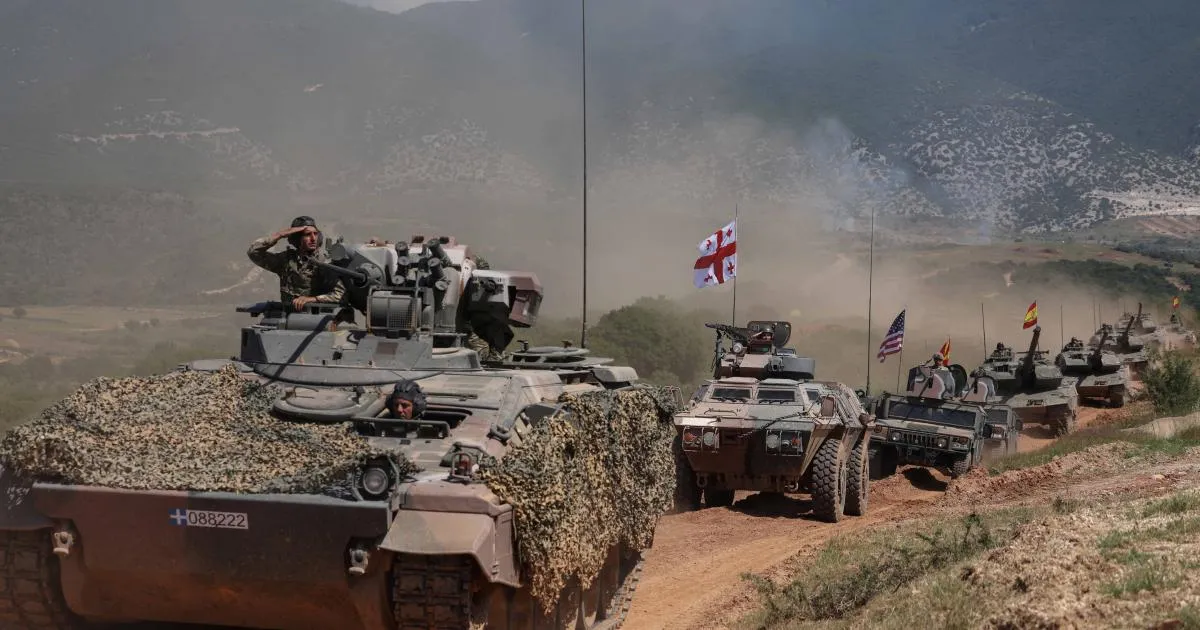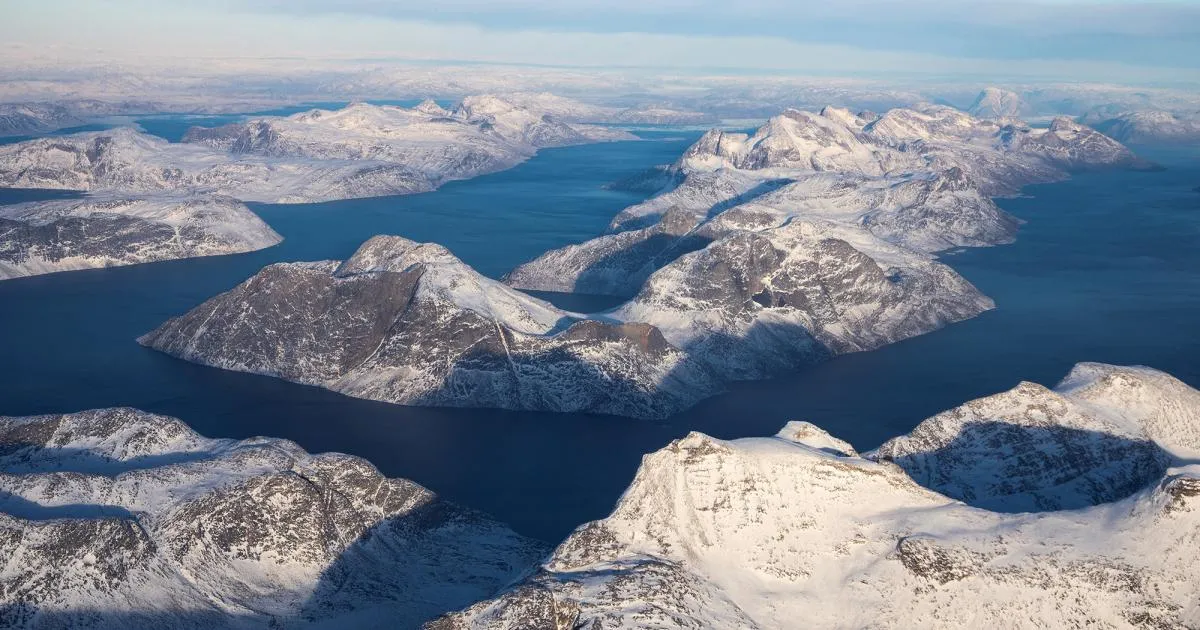
Arctic security is increasingly defined by the necessity of international cooperation rather than unilateral dominance. The recent agreement between Greenland, Denmark, and the United States codifies U.S. military access while affirming regional self-governance, providing a blueprint for managing the Arctic's immense geographic challenges. This deal follows years of environmental and logistical failures that highlighted the limits of even the most advanced militaries. As geopolitical competition intensifies, Washington is moving away from a mindset of total self-reliance toward a model of strategic interdependence. This article examines the implications of the Greenland deal, the necessity of allied sensor networks, and the potential for a collaborative Arctic industrial strategy.
Why is Arctic security impossible through self-reliance alone?
The Arctic environment possesses a unique capacity to humble even the most proficient global powers through its extreme weather, darkness, and sparse infrastructure. Historical precedents demonstrate that even experienced nations struggle with the region's volatility. In 2016, a sudden ice crack interrupted a U.S. Navy Arctic exercise near Alaska, while in 2025, a Canadian-led exercise saw helicopters grounded and communications equipment fail due to extreme cold.
These incidents underscore a fundamental reality: no single nation, including the United States, possesses the capacity to see, maneuver, and sustain operations across the entire Arctic circle independently. The region's vast distances and the thinning of sea ice create a landscape where traditional military capabilities are frequently pushed to their breaking points. Consequently, effective sovereignty in the North is not a product of isolated strength but of building robust networks of dependence.
The Paradox of Arctic Power
The Arctic represents a strategic paradox for Washington. It serves as a primary approach to the U.S. homeland and a critical platform for projecting power globally. However, the very features that make it valuable—its strategic position and resource potential—also make it one of the most difficult environments to control. While the U.S. has historically viewed Arctic shortfalls as problems to be solved through increased domestic capability, the sheer scale of the geography makes total self-reliance an unrealistic and prohibitively expensive goal.
How does the Greenland deal reshape regional alliances?
The recent tripartite agreement involving Greenland, Denmark, and the United States signals a pivotal shift in how Washington approaches Arctic sovereignty. By codifying U.S. military access while simultaneously affirming the self-governance of Denmark and Greenland, the deal balances American security needs with the political realities of regional autonomy. President Donald Trump has characterized the agreement as a victory for American interests, while the Danish and Greenlandic authorities view it as a win for their own sovereignty.
This symbiotic relationship is essential because almost every mission conducted in Greenland—ranging from submarine detection and missile warning to essential resupply operations—relies on the U.S. being deeply embedded within an alliance system. This move represents a departure from earlier, more isolationist rhetoric that suggested the U.S. might acquire Greenland or seek unilateral control. Instead, the agreement suggests that the most productive path to securing the Arctic is through strengthening ties with established partners.
What role do allies play in Arctic situational awareness?
Arctic awareness is currently fragmented across North America, Europe, and the Pacific, making integrated intelligence a necessity. The United States relies heavily on a network of partners to bridge gaps in its own sensory and intelligence capabilities. For instance, because of domestic coverage gaps, the U.S. utilizes Japanese satellite technology to monitor Arctic sea ice, which is vital for predicting changes in commercial and military maritime routes.
Furthermore, the expertise of Nordic nations is indispensable for interpreting the intentions of competitors. These nations have decades of experience monitoring Russian military activity near the Kola Peninsula, a region housing significant Russian nuclear capacity. Their ability to distinguish between routine maneuvers and escalatory behavior provides a level of nuance that Washington cannot achieve alone. While the U.S. provides critical visibility regarding Chinese and Russian patterns near Alaska, the integration of these different perspectives remains a challenge.
Closing the Information Gap
A significant hurdle in modern Arctic security is the lack of seamless communication between different organizational structures. Currently, information and communications do not always flow fluidly between NORAD and NATO, despite both being central to Arctic stability. To solve this, the United States does not need to command all data, but rather act as a standard-setter to ensure that allied systems remain interoperable as partners develop their own sovereign sensors and communication networks.
How can the U.S. optimize movement and logistics in the North?
The United States faces a geographic dilemma: it must project power into both the Atlantic and Pacific Oceans, yet Alaska is its only sovereign Arctic territory. This means that almost all U.S. reach across the North Atlantic and the European Arctic is facilitated through the territory or cooperation of allies. The U.S. has spent decades cultivating this access, which has proven vital during high-stakes operations.
In 2018, a U.S. carrier strike group operating in the Arctic was forced to rely on Norwegian and NATO logistics for resupply and used Norway's fjords for protection against 30-foot seas. Similarly, recent defense cooperation agreements with Finland, Norway, and Sweden have granted the U.S. access to numerous strategic sites. These arrangements are not merely diplomatic favors; they are calculated moves by Nordic states to strengthen deterrence against Russia through a combined presence of allied geography and American military capacity.
The Strategy of Burden Sharing
Rather than attempting to maintain a presence everywhere, the U.S. can achieve greater security by empowering allies to take primary responsibility for the sectors where they are best positioned. For example, Nordic states are already leading the charge in monitoring hybrid threats, such as GPS jamming and undersea cable sabotage. By allowing allies to lead in these areas, the U.S. can concentrate its finite resources on the Pacific Arctic and Alaska, where decades of underinvestment in ports, icebreakers, and runways have left significant vulnerabilities.
What are the opportunities for an Arctic industrial strategy?
The specialized and expensive nature of Arctic technology offers a unique opportunity for a collaborative industrial strategy among allies. Developing the necessary hardware—such as icebreakers, satellite communications, and cold-hardened energy systems—is often too costly for a single nation to sustain. In 2024, the United States began addressing its icebreaker deficit by cooperating with Canada and Finland to pool shipyards, labor, and technical expertise.
A formal collaborative model could extend to several critical areas of defense and infrastructure:
Missile Defense: Inviting allies like Canada to participate in the Golden Dome system to increase coverage and redundancy.
Communications: Developing shared architectures for military satellite communications to ensure stability during crises.
Energy and Environment: Pooling research into small modular reactors and cold-hardened batteries to support off-grid communities and remote troops.
Supply Chains: Coordinating on the development and stockpiling of critical minerals essential for new technologies.
This approach does not mandate massive multinational procurement programs or total dependence on single suppliers. Instead, it allows for a deliberate division of labor where nations decide what to build, what to buy from one another, and where joint development provides the highest return on investment.
FAQ: Arctic security and the Greenland deal
How does the Greenland agreement affect U.S. sovereignty?
The agreement does not expand U.S. territory but secures vital military access. By codifying these rights through a deal with Denmark and Greenland, the U.S. strengthens its ability to perform missile warning and submarine detection while respecting the self-governance of its partners.
Why can't the U.S. manage the Arctic alone?
The Arctic's extreme geography, lack of infrastructure, and vast distances make unilateral management impossible. The U.S. lacks sufficient icebreakers, sensor coverage, and logistical bases to cover both the Atlantic and Pacific sides of the region without relying on allied networks.
What is the importance of Nordic intelligence?
Nordic nations possess decades of specialized experience monitoring Russian military activity, particularly around the Kola Peninsula. This local expertise allows them to provide the U.S. with critical context regarding whether Russian movements are routine or represent an escalatory threat.
How does the Arctic environment impact military operations?
Extreme cold and unpredictable ice conditions can ground aircraft, break essential equipment like snowmobiles, and disrupt communications. These environmental factors create significant logistical hurdles that require specialized technology and constant support from nearby allied bases and infrastructure.
Can allies help rebuild the U.S. Arctic industrial base?
Yes, through collaborative models like the 2024 partnership with Canada and Finland on icebreaker production. By pooling shipyards and technical expertise, the U.S. can rebuild its specialized maritime capabilities more efficiently while strengthening the broader allied industrial base.
Key takeaways
The Greenland deal emphasizes strategic interdependence over unilateral self-reliance for Arctic security.
Allied sensor networks and Nordic intelligence are vital for monitoring Russian and Chinese activities.
Effective Arctic power projection requires leveraging allied geography in the North Atlantic and Pacific.
Collaborative industrial strategies can address shortages in icebreakers, satellite communications, and critical minerals.
Looking ahead at Arctic stability
The shift toward interdependence marks a maturing approach to Arctic geopolitics. As the region becomes a more contested space, the ability of the United States to work within an alliance framework will determine its success. The Greenland agreement is more than a logistical arrangement; it is a recognition that the Arctic's challenges are too vast for any one nation to conquer. By embracing shared industrial goals and integrated intelligence, the U.S. and its allies can create a more resilient and predictable security environment in the high North.