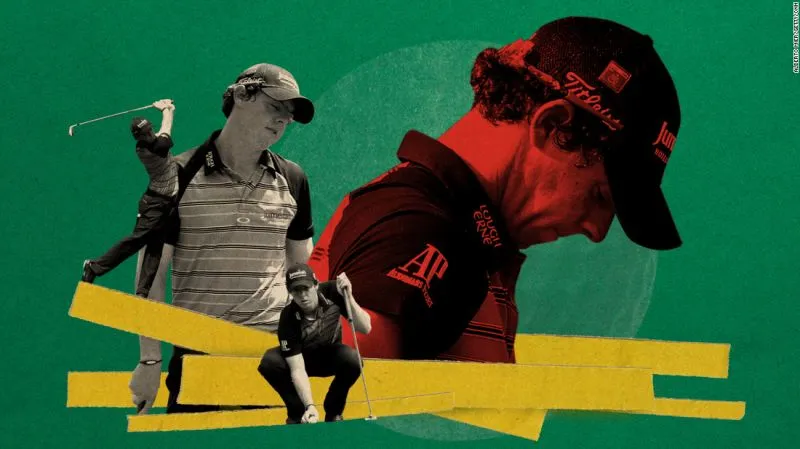
Golf meltdowns refer to catastrophic psychological and performance collapses during high-stakes professional tournaments. Throughout history, several players have surrendered massive leads in the final holes of major championships due to errors or mounting pressure. From Rory McIlroy's 2011 Masters collapse to Jean Van De Velde's 1999 British Open disaster, these moments define the volatility of the sport. This article examines the most significant historical meltdowns, the specific errors that triggered them, and the lasting impact these collapses had on the players' legacies.
How did Rory McIlroy's 2011 Masters collapse reshape his career?
Rory McIlroy entered the final round of the 2011 Masters at Augusta National with a commanding four-shot lead, looking poised to secure his first major title. The 21-year-old Northern Irishman maintained control early, holding a one-shot advantage at the turn despite a somewhat shaky start. However, the momentum shifted violently at the 10th tee when a skewed drive into the trees initiated a disastrous sequence.
The collapse was rapid and devastating. McIlroy dropped six shots over just three holes, effectively erasing his lead and his championship aspirations in a matter of minutes. By the end of the day, he finished tied for 15th place. This moment remains a defining chapter in his professional narrative, illustrating how quickly a dominant position can evaporate under the intense scrutiny of a major championship.
Why are Jean Van De Velde and Greg Norman considered legends of the meltdown?
Jean Van De Velde's performance at the 1999 British Open is widely regarded as one of the most heartbreaking implosions in sporting history. Entering the 18th hole at Carnoustie, the world No. 152 held a three-shot cushion. Even a double bogey would have secured him the Claret Jug, making him only the second Frenchman to win the title. Instead, a series of errors—including a skewed drive, a shot hitting a grandstand, and a third effort landing in the Barry Burn—resulted in a triple-bogey. While he managed to force a playoff, he ultimately lost to Paul Lawrie.
Similarly, Greg Norman experienced a profound loss of control during the 1996 Masters. Known as "The Great White Shark," the Australian held a six-shot lead over Nick Faldo entering the final round. Even with 11 holes remaining, Norman maintained a four-stroke advantage. The collapse was triggered by a sequence of three consecutive bogeys followed by a double bogey. Despite attempting a brief recovery with two birdies, a final double bogey at the 16th hole allowed Faldo to claim a five-shot victory.
Comparing the scale of major collapses
While both players held significant leads, the nature of their failures differed. Van De Velde's collapse was a singular, concentrated disaster on one hole, whereas Norman's was a gradual erosion of a massive advantage over several holes. Both instances, however, serve as cautionary tales regarding the mental fortitude required to close out a major championship.
What role did pressure play in the collapses of Arnold Palmer and Sam Snead?
Even the greatest icons of the game were not immune to the psychological weight of major championships. Arnold Palmer, "The King," entered the 1966 US Open in San Francisco with a massive seven-shot lead heading into the back nine. He appeared certain to claim an eighth major title, but the lead evaporated as he recorded bogeys on five of the following seven holes. This allowed Billy Casper to force an 18-hole playoff, which Palmer eventually lost by four strokes after another late-round slump.
Sam Snead's struggle with the US Open is a hallmark of golf lore. Despite winning 82 PGA Tour victories and seven major championships, the US Open remained elusive. In 1947, Snead entered an 18-hole playoff against Lew Worsham with a two-shot lead and only three holes to play. He was eventually overtaken and lost the title after missing a critical putt from inside three feet on the final hole.
How did Scott Hoch and Ed Sneed experience sudden-death heartbreak?
Sudden-death playoffs often amplify the pressure of a meltdown, as seen in the cases of Scott Hoch and Ed Sneed. At the 1989 Masters, Scott Hoch found himself in a playoff against Nick Faldo. Hoch had two opportunities to win with a relatively short putt from approximately 25 feet; however, his first attempt rolled around the lip of the hole, and his second effort failed to drop. When Faldo birdied the next hole, Hoch's chance at a first major disappeared.
Ed Sneed faced a similar fate at the 1979 Masters. Holding a three-up lead with only three holes remaining, Sneed suffered a trio of bogeys that forced the first-ever sudden-death playoff at Augusta. He was ultimately defeated by debutant Fuzzy Zoeller, who secured a one-stroke victory. For Sneed, this remained the closest he ever came to winning a major championship.
Can a meltdown ever lead to a positive outcome?
In rare instances, a player's personal collapse can be mitigated by the failures of their competitors, providing a form of psychological relief. Mark Calcavecchia experienced such a moment during the 1991 Ryder Cup at Kiawah Island. During the intense "War on the Shore," Calcavecchia was four up with four holes to play against Colin Montgomerie. He proceeded to lose all four remaining holes, a collapse that left him devastated and fearing he had cost the American team the Cup.
However, the outcome was ultimately decided by others. Germany's Bernhard Langer missed a six-foot putt that would have secured the Cup for Europe, thereby handing the victory to the United States with a score of 14.5 to 13.5. While Calcavecchia's performance was a tactical failure, the team's overall success spared him from being the sole scapegoat of the tournament.
Key takeaways
- Rory McIlroy lost a four-shot lead at the 2011 Masters after a disastrous stretch at the 10th hole.
- Jean Van De Velde's 1999 British Open error involved hitting a ball into the Barry Burn while leading.
- Greg Norman surrendered a six-shot lead at the 1996 Masters to Nick Faldo.
- Arnold Palmer lost a seven-shot lead during the back nine of the 1966 US Open.
- Sam Snead missed a three-foot putt in a 1947 playoff to lose the US Open.
Frequently asked questions
What was the most famous golf meltdown in history?
Jean Van De Velde's performance at the 1999 British Open is widely considered the most famous. After holding a three-shot lead on the 18th hole, he hit his ball into the Barry Burn, leading to a triple-bogey and an eventual loss in a playoff against Paul Lawrie.
How many majors did Sam Snead win?
Sam Snead won seven major championships during his legendary career. Despite his immense success and 82 PGA Tour victories, the US Open remained the only major title he was unable to secure, famously losing a playoff in 1947.
What happened to Rory McIlroy in the 2011 Masters?
Rory McIlroy entered the final round with a four-shot lead but suffered a catastrophic collapse starting at the 10th hole. After a poor drive into the trees, he dropped six shots over three holes, finishing the tournament tied for 15th place.
Did Arnold Palmer ever lose a major lead?
Yes, Arnold Palmer lost a significant lead at the 1966 US Open. He entered the back nine with a seven-shot advantage but recorded five bogeys in seven holes, allowing Billy Casper to force a playoff, which Palmer eventually lost.
What is a sudden-death playoff in golf?
A sudden-death playoff is a tie-breaking format where players compete hole by hole until one player wins a hole and the other does not. This format was first used at the Masters in 1979 during the playoff between Fuzzy Zoeller and Ed Sneed.
Conclusion
The history of professional golf is defined as much by its collapses as by its triumphs. The meltdowns of players like Rory McIlroy, Jean Van De Velde, and Greg Norman serve as enduring reminders of the extreme mental volatility inherent in major championship golf. These moments highlight how a single errant drive or a lapse in concentration can dismantle years of preparation and massive statistical advantages. While these players faced immense heartbreak, their stories remain central to the lore of the sport, illustrating the thin margin between sporting immortality and historical infamy.