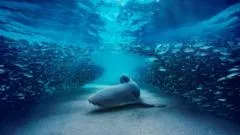
Marking 25 years since the original franchise premiere, the new six-part series uses advanced submersibles and drones to explore marine life more precious than ever realised. This ambitious BBC production brings viewers closer to the mysteries of the abyss than ever before. Through cutting-edge underwater technology, the documentary captures breathtaking footage of species previously unseen by human eyes. Sir David Attenborough returns to guide us through these fragile ecosystems, highlighting the urgent need for conservation in our changing world. The series also features a powerful, immersive musical score composed by Hans Zimmer.
What is the scope of the Blue Planet III series?
Blue Planet III is a six-part documentary series produced by the BBC Natural History Unit in Bristol, designed to explore the most misunderstood and least understood marine ecosystems on Earth. The series covers a vast biological spectrum, ranging from the vibrant life found in tropical islands and coral reefs to the extreme, high-pressure environments of the ocean's darkest depths.
The production marks a significant milestone for the franchise, arriving 25 years after the premiere of the first Blue Planet series. This new instalment follows nearly four years of dedicated filming to ensure that the footage captures the complexity of marine life in unprecedented detail. Sir David Attenborough, who celebrated his 100th birthday earlier this year, provides the narration for the series, expressing his pride in returning to the franchise during his centennial year.
At a launch event on Tuesday, Sir David reflected on the longevity of the project, noting that when he narrated the first series, he never imagined he would be narrating a third in his centennial year. According to Sir David Attenborough, the series aims to uncover life that is more intelligent and more precious than previously realised. The overarching goal is to highlight the extraordinary and vital relationship between humanity and the ocean, a connection that the broadcaster suggests has never been more critical to understand than it is today.
How did filmmakers capture these deep-sea environments?
Filmmakers utilised a suite of advanced technological tools to access and record environments that were previously unreachable or difficult to observe. Because the series focuses heavily on the "darkest depths," the production required equipment capable of withstanding extreme conditions while maintaining high-definition visual clarity.
The technical arsenal used during the four-year filming period included several key components:
- Manned Submersibles: Allowing crews to descend into deep-sea trenches to observe marine life in situ.
- Remote Underwater Cameras: Providing high-resolution visuals from fixed or mobile positions in deep-water zones.
- Drones: Capturing aerial perspectives of tropical islands and surface-level marine activity.
These technologies were essential for capturing newly discovered animal behaviours that had never been documented before. By combining remote sensing with direct human observation via submersibles, the BBC Natural History Unit was able to bridge the gap between surface-level ecology and the mysterious biological processes occurring in the abyss. The use of these tools allows the series to present a view of the ocean that is both vast and intimately detailed.
The role of advanced marine technology
The integration of robotics and submersible technology represents a significant leap from the original Blue Planet series. Where earlier documentaries relied on more limited camera placements, Blue Planet III leverages autonomous and manned vehicles to navigate the verticality of the ocean. This allows the series to transition seamlessly from the sunlight-drenched coral reefs to the midnight zones of the deep sea, providing a continuous narrative of the ocean's biological layers.
By venturing further than previous instalments, the production uses these tools to uncover the "extraordinary relationship" we have with the sea. The ability to deploy remote cameras and drones ensures that even the most elusive animal behaviours can be recorded, providing a window into worlds that were once considered inaccessible to human observation.
Who contributed to the Blue Planet III soundtrack?
The auditory experience of Blue Planet III is anchored by a collaboration between legendary composer Hans Zimmer and the Bleeding Fingers Music team. Zimmer, who provided the score for the previous instalment, has described this new project as the "most important work" he has ever done.
The musical direction is intended to evoke emotion rather than simply provide background noise. Zimmer noted that the series is designed to make viewers fall in love with the natural world, rather than lecturing or cajoling them about conservation. He explained that the series shows how spectacular and beautiful our world truly is, emphasizing that we need to preserve it and treat whatever we love with "great kindness and great respect." He believes the series changes the world by fostering this sense of connection through its music and imagery.
In addition to the orchestral score, the series features a contemporary musical element. The song "Into The Deep (Seas Cry)" was co-written by Jade Thirlwall, a member of the pop group Little Mix. Thirlwall, a long-time fan of the franchise, described her involvement as a significant privilege and a way to honour Attenborough, whom she called a "true hero." This blend of cinematic scoring and modern songwriting reflects the series' attempt to reach a diverse, global audience through its launch and presentation.
How was the series launched to the public?
The launch of Blue Planet III was marked by a high-profile event at Piccadilly Circus in London on Tuesday. This event served as a visual spectacle, utilizing the massive digital displays of one of the world's most famous advertising hubs to showcase footage from the upcoming series.
The use of Piccadilly Circus allowed for a massive public unveiling, mirroring the scale of the ocean exploration depicted in the programme. By taking over these digital screens, the BBC provided a glimpse into the "endlessly fascinating" world that Attenborough describes, setting the stage for the series' premiere on the BBC later this autumn. The launch event highlights the cultural weight of the Blue Planet brand and its ability to command attention on a global stage, using the bright lights of London to introduce viewers to the darkest depths of the sea.
Frequently asked questions
When will Blue Planet III be released?
Blue Planet III is scheduled to air on the BBC later this autumn. The release follows a rigorous four-year production and filming period conducted by the BBC Natural History Unit to ensure the highest quality of marine exploration.
Who is the narrator of the new series?
Sir David Attenborough is the narrator for Blue Planet III. The veteran broadcaster, who turned 100 years old earlier this year, returns to the franchise to document the ocean's deepest and most mysterious inhabitants.
What kind of technology is used in the production?
The production employs advanced equipment such as manned submersibles, remote underwater cameras, and drones. These tools allow the film crews to capture animal behaviours in environments ranging from tropical reefs to the deepest parts of the ocean.
Who composed the music for the series?
Hans Zimmer and Bleeding Fingers Music are responsible for the original score. Zimmer, who also scored Blue Planet II, considers this project to be his most significant work to date due to its environmental importance.
Is there a pop music connection to the documentary?
Yes, Jade Thirlwall of the pop group Little Mix co-wrote the original song "Into The Deep (Seas Cry)" for the series. Thirlwall expressed that being part of the project was a special privilege and a way to support the franchise.
Key takeaways
- Blue Planet III is a six-part series exploring the ocean's deepest and most remote marine environments.
- The production involved nearly four years of filming using submersibles, drones, and remote cameras.
- Sir David Attenborough narrates the series during his centennial year.
- Hans Zimmer returns to provide the original musical score for the documentary.
- The series marks the 25th anniversary of the original Blue Planet franchise.
Conclusion
Blue Planet III represents a significant evolution in natural history filmmaking, combining decades of storytelling expertise with cutting-edge deep-sea technology. By moving beyond the well-known habitats of coral reefs into the darkest reaches of the ocean, the series seeks to redefine our understanding of marine intelligence and complexity. Through the combined efforts of Sir David Attenborough, Hans Zimmer, and the BBC Natural History Unit, the project aims to foster a profound emotional connection to the sea. Ultimately, the series serves as a vital reminder of the necessity to preserve the world's oceans through respect and global awareness.