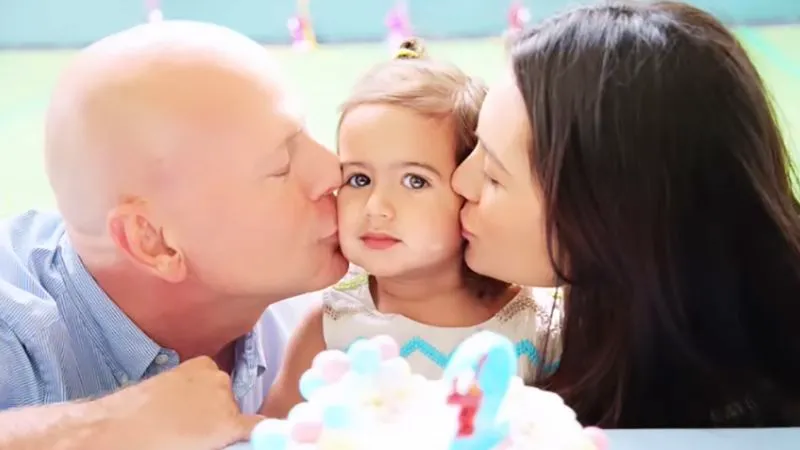
As the Willis family continues to navigate the deeply emotional complexities surrounding Bruce Willis's ongoing health battle and FTD diagnosis, Emma Heming Willis has taken a moment to pause and celebrate a significant family milestone. Through a touching and nostalgic social media tribute, Emma shared a beautiful look back at daughter Mabel's incredible journey as she reaches the age of 11. The heartfelt post serves as a poignant reminder of the strength and love that bind the family together during these challenging times, highlighting the joy found in growing up despite the surrounding medical uncertainty.
How did Emma Heming Willis celebrate Mabel Willis' 11th birthday?
Emma Heming Willis honored her daughter Mabel's 11th birthday by releasing a curated montage of family milestones on social media. The tribute used music and imagery to track Mabel's growth from infancy to her current preteen years. By selecting 'Pictures Of You' by The Cure as the soundtrack, Heming Willis emphasized the reflective and sentimental nature of the milestone, turning a simple birthday into a profound walk down memory lane.
In her Instagram caption, Heming Willis expressed deep admiration for her daughter's personality, moving beyond simple birthday wishes to describe the impact Mabel has on those around her. She specifically noted that Mabel possesses an infectious energy and a capacity to "light a whole room with your smile and warmth." The message also highlighted Mabel's nurturing nature, with her mother observing how beautifully the young girl cares for her friends and family members. "How you love and care for your family and friends is beautiful to witness," Heming Willis wrote, encouraging her daughter to "keep shining" and use the hashtag "#liveitup."
The contents of the digital montage
The visual tribute provided fans with a glimpse into the private life of the Willis family, juxtaposing moments of early childhood with the realities of the present. The montage was designed to show the passage of time and the strength of the family unit. One particular image captured a tender moment from Mabel's infancy, showing actor Bruce Willis holding the baby and planting a kiss on her forehead. This image serves as a poignant reminder of the family's bond during earlier years.
More recent clips in the montage show a more grown-up Mabel engaging in outdoor activities in nature, showcasing her transition into her preteen years. A more recent image specifically depicts a beaming Bruce Willis hanging out in nature with his preteen daughter. These shared memories serve as a public testament to the close-knit bond maintained by the family, even as they navigate significant personal and medical hurdles. The contrast between the baby Mabel and the preteen Mabel provides a visual narrative of a childhood growing up alongside a father who has faced increasing health challenges.
What is the current status of Bruce Willis' health?
The Willis family is currently managing the progression of Bruce Willis' neurological condition, which was recently updated for the public. While the actor had previously been known to struggle with aphasia, a speaking disorder, his family confirmed in February that his condition has advanced into frontotemporal dementia (FTD).
The family's announcement was aimed at both informing supporters and raising medical awareness. They expressed a hope that the media attention surrounding the actor's condition would be redirected toward the need for increased research and awareness of FTD. "Today there are no treatments for the disease, a reality that we hope can change in the years ahead," the family stated in an update shared online. This transparency highlights the difficult reality the family faces as they manage the advancing condition and the limitations of current medical science.
Who makes up the Willis family unit?
The family structure surrounding Bruce Willis is multifaceted, involving both his current marriage and his previous domestic life. Emma Heming Willis and Bruce Willis have been married since 2009, and together they share two daughters: Mabel, who recently turned 11, and 8-year-old Evelyn.
Beyond his immediate household with Emma, Bruce Willis has a significant connection to his children from his previous marriage to actress Demi Moore. He is the father of Rumer, Scout, and Tallulah Willis. The family has frequently demonstrated a unified front, particularly in supporting Bruce through his recent health challenges. This collective support was evident in previous tributes, such as when Emma Heming Willis shared a video montage for Bruce's 68th birthday, referring to him as "pure love." The extended family remains deeply involved in his care and the public advocacy for dementia research.
What is frontotemporal dementia (FTD)?
Frontotemporal dementia (FTD) is a group of neurological disorders characterized by the progressive loss of nerve cells in specific regions of the brain. According to the Alzheimer’s Association, these losses occur primarily in the frontal lobes—the area located behind the forehead—and the temporal lobes.
Because these specific regions are responsible for critical cognitive functions, the impact of the disease is often distinct from other forms of dementia. The symptoms of FTD are largely tied to the degradation of these brain areas, which govern personality, behavior, and language. As the disease progresses, individuals may experience significant changes in how they interact with others, how they control their impulses, and how they communicate. This makes the diagnosis particularly challenging for families, as the personality shifts can be profound and affect the very essence of the person's identity.
Understanding the neurological impact
The distinction between the frontal and temporal lobes is crucial for understanding why FTD presents differently than other conditions. While the areas of the brain are generally associated with personality and behavior, the progressive loss of these cells fundamentally alters how an individual engages with the world. This neurological profile explains why the family's plea for research is so urgent; the disease impacts the very essence of a person's character and their ability to communicate with loved ones.
The progression from aphasia—a disorder specifically affecting speech—to the broader umbrella of FTD illustrates how the neurological damage expands. While aphasia focuses on the loss of language, FTD encompasses the broader changes in behavior and personality that stem from the nerve cell loss in the frontal and temporal lobes. This transition marks a significant shift in the level of care and understanding required by the family.
Frequently asked questions
How old is Mabel Willis?
Mabel Willis turned 11 years old on Sunday. Her mother, Emma Heming Willis, celebrated the milestone by sharing a series of nostalgic family photos and videos on Instagram to mark the occasion.
What medical condition does Bruce Willis have?
Bruce Willis has been diagnosed with frontotemporal dementia (FTD). This follows a previous diagnosis of aphasia, a speaking disorder. His family announced the progression to FTD in February to help raise awareness for the disease.
Who are Bruce Willis' other children?
In addition to Mabel and Evelyn with Emma Heming Willis, Bruce Willis has three daughters from his previous marriage to Demi Moore: Rumer, Scout, and Tallulah Willis.
Is there a cure for frontotemporal dementia?
No, there are currently no known treatments for frontotemporal dementia. The Willis family has publicly stated that they hope future research will change this reality and provide better options for those affected by the disease.
What parts of the brain does FTD affect?
FTD involves the progressive loss of nerve cells in the brain's frontal lobes and temporal lobes. These areas are essential for regulating personality, language, and social behavior.
Key takeaways
- Emma Heming Willis celebrated Mabel Willis' 11th birthday with a nostalgic Instagram tribute.
- Bruce Willis' health has progressed from aphasia to frontotemporal dementia (FTD).
- The Willis family is using their platform to advocate for increased FTD research and awareness.
- FTD primarily affects the frontal and temporal lobes of the brain, impacting personality and language.
Looking ahead for the Willis family
The celebration of Mabel's birthday provides a moment of joy amidst a period defined by medical uncertainty. As the Willis family continues to navigate the complexities of frontotemporal dementia, their approach has remained focused on transparency and advocacy. By sharing both the milestones of their children and the realities of Bruce's health, they are bridging the gap between celebrity life and the lived experience of caregivers, ultimately aiming to drive the awareness necessary for future medical breakthroughs.