The Angel Reese gesture directed at Caitlin Clark has ignited a fierce debate regarding sportsmanship and racial double standards in women's basketball. Following LSU's 102-85 victory over Iowa in the 2023 NCAA championship, Reese defended her actions, citing a disparity in how similar celebrations are perceived. While critics labeled the move classless, supporters highlighted that Iowa's Caitlin Clark performed a similar gesture earlier in the tournament without facing equivalent backlash. This article examines the specifics of the incident, the reactions from players and media, and the broader conversation regarding identity and authenticity in professional sports.
What was the Angel Reese gesture and why did it spark debate?
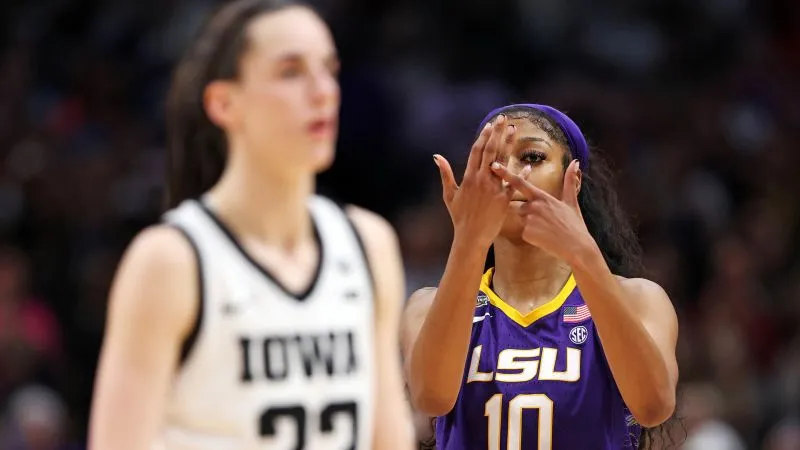
The Angel Reese gesture occurred during the closing stages of the 2023 NCAA women's basketball national championship game. As LSU secured its first title, Reese approached Iowa's Caitlin Clark and performed a hand motion in front of her face—a gesture popularized by WWE star John Cena known as "you can't see me"—before pointing to her ring finger. This second motion was interpreted by many as a reference to the championship ring she had just earned.
The reaction to this moment was immediate and deeply divided. On social media, the gesture became a lightning rod for criticism, with some observers viewing it as an act of disrespect toward an opponent. High-profile media figures joined the fray; sports journalist Jose de Jesus Ortiz described the act as "classless," while former ESPN host Keith Olbermann referred to Reese as an "idiot" for the display.
The context of the championship moment
For Reese, the gesture was not a random act of provocation but a culmination of a high-stakes season. Having recorded 15 points and 10 rebounds in the final, she was named the tournament's Most Outstanding Player. She described the moment as being "in my bag," suggesting it was an expression of her personal success and the culmination of her hard work during a season where she felt she had to fight for recognition.
How did Angel Reese respond to accusations of disrespect?
Angel Reese responded to the backlash by asserting that she does not take disrespect lightly and by highlighting the perceived double standards in how she is judged. During her post-victory press conference, Reese addressed the critiques regarding her personality and background, noting that she has been told throughout the year that she is "too hood" or "too ghetto" because she does not fit a specific, preconceived narrative of how a female athlete should behave.
Reese framed her actions as a form of empowerment for others who share her background. She stated that her behavior was intended for "the girls that look like me" and those who wish to remain unapologetically themselves. By doing so, she shifted the conversation from a simple matter of sportsmanship to a broader discussion about identity, authenticity, and the pressure to conform to societal expectations.
Why is there a debate regarding a double standard?
A central pillar of Reese's defense is the claim that Caitlin Clark received far less scrutiny for performing a nearly identical gesture earlier in the NCAA tournament. Reese pointed out that Clark had used the "you can't see me" gesture during the Elite Eight against a Louisville opponent, yet the public outcry was significantly muted compared to the reaction Reese faced after the championship game.
This sentiment was echoed by several sports professionals who argued that the criticism directed at Reese is rooted in bias. Former NBA player Etan Thomas noted that the gesture was considered "cute" when Clark performed it, but was treated as a breach of class when Reese did the same. Similarly, ESPN's Holly Rowe advocated for the celebration of confident young women, urging the public to stop hating on athletes for expressing their personalities.
Comparing the players' perspectives
While the media and fans clashed, the players themselves offered different views on the interaction. Reese noted that she felt Clark had previously disrespected LSU player Alexis Morris, which motivated her competitive drive. In contrast, Caitlin Clark stated she was entirely unaware of the gesture at the time, noting that her focus was purely on the end of her collegiate career and expressing gratitude for the season.
| Feature | Angel Reese (LSU) | Caitlin Clark (Iowa) |
|---|---|---|
| Tournament Role | Most Outstanding Player | Record-breaking March Madness run |
| Key Stats (Final) | 15 points, 10 rebounds | High-scoring leader |
| Gesture Context | Post-victory celebration | Elite Eight tournament play |
| Public Reaction | Significant criticism/controversy | Minimal immediate backlash |
What was the impact of the game on women's basketball?
Despite the controversy surrounding individual gestures, the 2023 championship game served as a landmark moment for the growth of women's basketball. Reese herself acknowledged that her presence and the intensity of the season have helped expand the sport's reach. The high level of competition between LSU and Iowa, driven by star players like Reese and Clark, drew massive attention to the NCAA tournament.
LSU's victory, secured with a 102-85 scoreline, marked their first national championship. The team's journey, which included defeating a No. 1 seed (Virginia Tech) and a No. 2 seed (Iowa) in the Final Four, demonstrated the rising standard of play in the women's game. The intense rivalry and the personalities involved have created a new era of visibility for the sport, even as the discourse continues regarding how these athletes are portrayed in the media.
Frequently asked questions
What exactly did Angel Reese do during the game?
Angel Reese performed a "you can't see me" hand gesture toward Caitlin Clark and then pointed to her ring finger. This occurred during the final moments of the 2023 NCAA championship game after LSU had secured the victory, signaling her triumph and the acquisition of a championship ring.
Did Caitlin Clark make a similar gesture?
Yes, Caitlin Clark performed a similar gesture during the Elite Eight round of the tournament against a Louisville opponent. Reese and several supporters pointed to this instance to argue that Reese was being unfairly targeted for a behavior that had already been demonstrated by Clark without significant criticism.
How did the media react to Reese's actions?
Media reactions were polarized. Some journalists, such as Jose de Jesus Ortiz, condemned the gesture as "classless," while others, like Etan Thomas, defended Reese by highlighting the double standards applied to her. The debate often centered on whether the gesture was a breach of sportsmanship or an expression of confidence.
What was Angel Reese's statistical performance in the final?
In the championship game, Angel Reese recorded 15 points and 10 rebounds. Her overall performance throughout the tournament earned her the Most Outstanding Player award, cementing her status as a leading figure in the 2023 NCAA women's basketball season.
What did Caitlin Clark say about the incident?
Caitlin Clark stated that she did not notice the gesture at the time. She focused on the conclusion of her college career, expressing gratitude for her teammates and showing respect to LSU and their head coach, Kim Mulkey, following the game.
Key takeaways
- Angel Reese defended her post-game gesture as an unapologetic expression of her identity and success.
- Critics labeled Reese's actions "classless," while supporters cited a double standard regarding Caitlin Clark's similar gestures.
- LSU won the 2023 NCAA women's basketball championship with a 102-85 victory over Iowa.
- Reese was named the tournament's Most Outstanding Player after a strong season at LSU.
The evolving landscape of athlete identity
The controversy surrounding the Angel Reese gesture highlights a shifting paradigm in women's sports. As athletes like Reese and Clark command unprecedented attention, the scrutiny regarding their conduct, personality, and adherence to traditional norms has intensified. The debate is no longer just about on-court performance but about the right of athletes to navigate their professional identities without being forced into narrow stereotypes. Ultimately, the tension between individual expression and perceived sportsmanship will likely remain a central theme as women's basketball continues its rapid ascent in the global sporting consciousness.